Arterial Blood Pressure
What is normal arterial blood pressure and physiologic variations? Describe the role of sinoaortic mechanism in regulation of blood pressure. (or) Role of sino-aortic mechanism in regulation of blood pressure.
Answer:
Arterial blood pressure:
Definition:
- It is defined as lateral pressure exerted by the moving column of blood on the walls of arteries.
Normal value:
- In adult 120 mm Hg (100-130 mm Hg) – systolic BP
- Diastolic BP-80 mm Hg (70-85 mm Hg)
“Understanding arterial blood pressure through FAQs: Systolic vs diastolic pressure explained”
Physiologic variations:
- Age.
- Arterial blood pressure, increases with age.
- Sex.
- In females, BP is less than males before menopause.
- BP is more than males after menopause.
- Body built.
- BP is directly proportional to surface area.
- Thus, BP is more in obese persons.
- Diurnal variation.
- Peak values are observed during afternoon.
- In early morning, it is lowest.
- Gradually increases in afternoon and again reduces in evening.
- After meals.
- Due to sympathetic stimulation, BP increases after intake of food.
- Sleep.
- Due to low metabolic rate, BP decreases during sleep.
- However, it increases during sleep associated with dreams.
- Emotions.
- Excitement and anger increases blood pressure.
- Exercise.
- After moderate exercise.
- Systolic pressure increases, no effect on diastolic pressure.
- After severe exercise.
- Systolic pressure increases, diastolic pressure reduces.
- After moderate exercise.
- Posture.
- When an individual stands up venous return is decreased, leads to reduced cardiac output which in turn diminishes blood pressure.
“Importance of studying arterial blood pressure for medical students: Questions explained”
- Climate.
- Exposure to cold.
- Produces vasoconstriction.
- This increases BP.
- Exposure to heat.
- Produces vasodilation.
- This decreases BP.
- Exposure to cold.
Sinoaortic Mechanism:
Action of baroreceptors and chemoreceptors in carotid and aortic region constitute in carotid and aortic region constitute sinoaortic mechanism.
“Common challenges in mastering arterial blood pressure notes effectively: FAQs provided”
1. Action of baroreceptors:
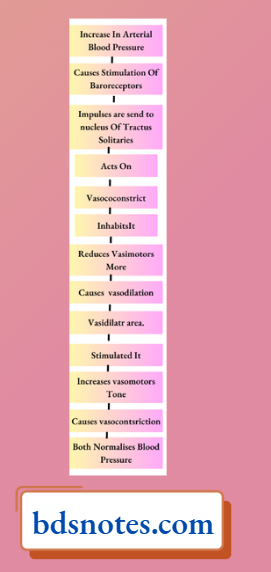
“Factors influencing success with arterial blood pressure studies: Q&A”
2. Action of chemoreceptors:

Leave a Reply