Anodontia: Understanding the Congenital Absence of Teeth
Question: Write a note on anodontia.
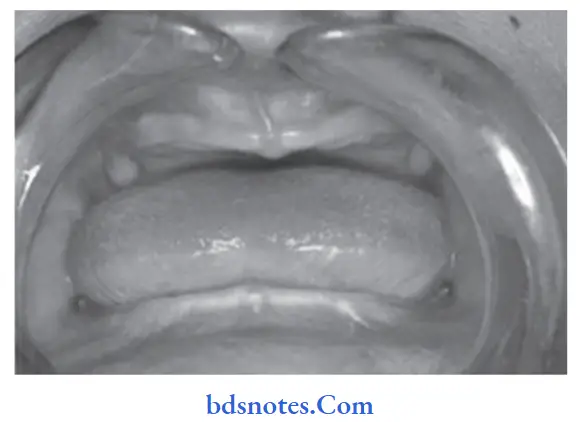
Answer. Anodontia is defined as the condition in which there is a congenital absence of teeth in the oral cavity.
Etiology Of Anodontia
The causes of anodontia are:
- Hereditary factor
- Environmental factor
- Familial factor
- Syndrome associated
- Radiation injury to the developing tooth germ.
“Understanding the role of anodontia in dental development: Q&A explained”
“Importance of studying anodontia for better diagnostic outcomes: Questions explained”
Anodontia is of two types:
1. Complete anodontia: There is the congenital absence of all the teeth.
2. Partial anodontia: Congenital absence of one or few teeth.
- Anodontia can also be divided into the following types:
- True anodontia: It occurs due to the failure of development or formation of tooth in jaw bone.
- Pseudoanodontia: It refers to the condition in which teeth are present within the jaw bone but are not clinically visible in the mouth, as they have not erupted, e.g. impacted teeth.
- False anodontia: It is the condition in which teeth are missing in the oral cavity because of their previous extraction.
“Common challenges in diagnosing anodontia effectively: FAQs provided”
Complete anodontia
- It is the condition in which there is neither any deciduous tooth nor any permanent tooth present in the oral cavity.
- It is usually seen in association with hereditary ectodermal dysplasia. A complete anodontia is a common feature of hereditary ectodermal dysplasia however in many cases cuspids are present in this disease.
- Complete anodontia occurs among children those who have received high doses of radiation to the jaws as infants for therapeutic extraction.
“Steps to explain the causes of anodontia: Genetic mutations vs environmental factors: Q&A guide”
Partial Anodontia
- It is a common phenomenon and is characterized by congenital absence of one or few teeth.
- In partial anodontia any tooth can be congenitally missing.
- Third molars are most frequently observed congenitally missing teeth.
- Mandibular first molar and the mandibular lateral incisor are least likely to be missing.
Leave a Reply