Anchorage In Orthodontics
- Simple anchorage.
- Stationary anchorage.
- Reciprocal anchorage.
Anchorage In Orthodontics Classification Notes
“Understanding the role of anchorage in orthodontic treatment”

“Importance of studying anchorage in orthodontics for better results”
Anchorage In Orthodontics Classification
- Intermaxillary.
- Intramaxillary.

“Common challenges in managing anchorage during orthodontic care”
- 100 to 75% space closure from anterior retraction and 25% closure from posterior anchorage movement.
- There is critical posterior anchorage.
Orthodontic Anchorage Types
“Steps to explain different types of anchorage in orthodontics”
- It includes more equal amount of anterior and posterior tooth movement for space closur.e
- This is an easy condition to deal with.
- It includes 75 to 100% of posterior protraction. There is a non-critical anterior anchorage and ca ritical posterior anchorage.
- Anterior retraction is only 25%.
- It is a non-critical anchorage.
- In this, resistance is provided by a single tooth with greater alveolar support, which is used to move the tooth with less alveolar support. An example is moving a tooth with a smaller root surface area against a tooth with a larger root surface area, which is known as an anchor.
“Role of intraoral vs extraoral anchorage in treatment planning”
Types Of Anchorage In Orthodontics
- Simple Anchorage is defined as “dental anchorage in which the manner and application of force aree such that it tends to change the axial inclination of the tooth or teeth that form the anchorage unit in the plane of space in which the force is being applied.”
“Early warning signs of poor anchorage control during treatment”
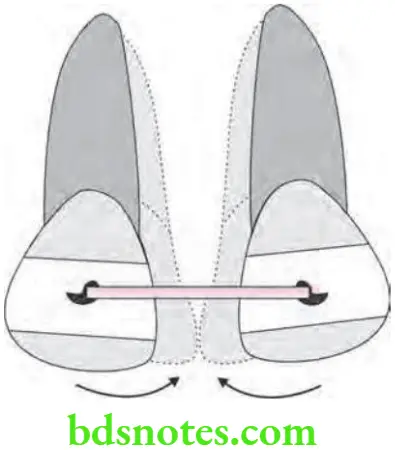
- Simple Anchorage is the resistance offered bthe y the anchorage unit to tipping.
- Simple Anchorages resistance value is low.
- This resistance to tipping is used to move another tooth.
Differential Anchorage In Orthodontics
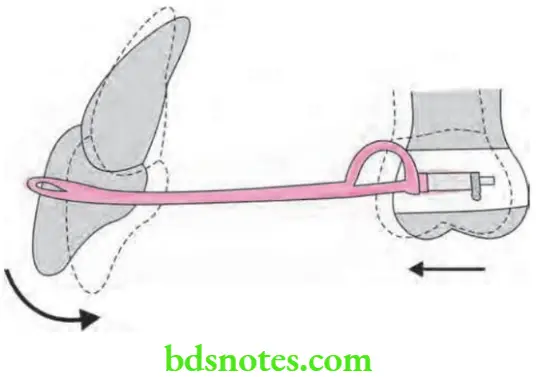
- Stationary Anchorage is defined as “dental anchorage in which the manner and application of force tends to displace the anchorage unit bodily inthe the plane of space in which the force is being applied”.
- Stationary anchorage is the resistance to bodily movement.
- An example of stationary anchorage is when molars are used as anchoring teeth for the retraction of maxillary incisors.
- In a real sense, only an extra-oral source of anchorage derived from head gears is the best example of stationary anchorage.
“Steps to educate patients about anchorage in orthodontics”
- Reciprocal Anchorage refers to the resistance offered by the two malposed unitss.
- When dissipation of equal and opposite forces tends to move each unit towards each other ia normal occlusion.
- Two teeth or two groups of teeth of equal anchorage value are made to move in opposite directionss.
“Role of counseling in clarifying anchorage goals for patients”
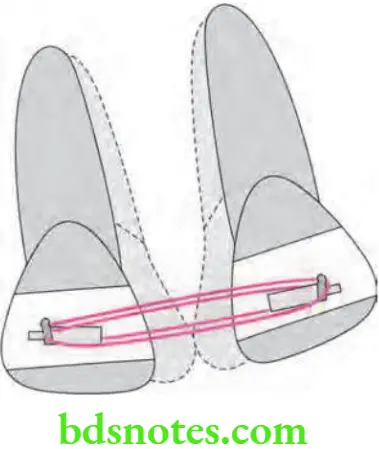
- An example of reciprocal anchorage is:
- Closure of midline diastema—By moving two central incisors towards each other.
- Crossbite elastics—For correction of single tooth posterior crossbite.
- In intramaxillary anchorage all the anchoraging lie in the single jaw.
- For this,appliances are either placed in the maxilla or the mandible.
- Intramaxillary Anchorage is divided into three types:.e. simple, stationary, and reciprocal type.
- Example: Elastic chains are used to retract atheterior segment using posterior teeth as anchorage units.
Anchorage Control Techniques
“Early warning signs of knowledge gaps in patient understanding”
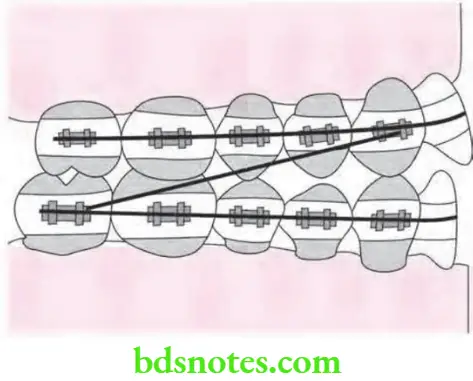
- Anchorage in which the resistance unit situated in one jaw is used to effect tooth movement in the opposing jaw is known as intermaxillary anchorage.
- Baker’s anchorage is an example of intermaxillary anchorage.
- Baker’s anchorage is the type of intermaxillary anchorage for adjusting both jaw relation and teeth with the help of applying elastic from mthe axilla to mandible.
Orthodontic Anchorage Classification and Examples
- Anchorage in which all the resistance units are situated within the oral cavity is known as intraoral anchorage.
- Sources for intraoral anchorage are teeth, palate, and lingual alveolar bone ofthe mandible.
- Intraoral Anchorage is classified into two divisions, i.e., intramaxillary anchorage and intermaxillary anchorage.
- Various extraoral anchorage sites, along with their example,s are:
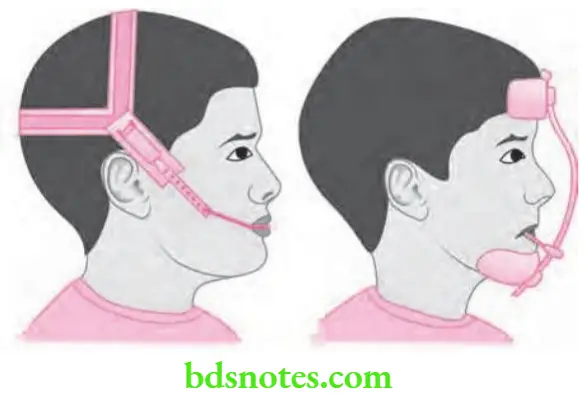
- In the occiput region, Head pullgear and chin cup can be given.
- Back of the neck: Cervical headgear is used.
- Forehead: Reverse pull headgear is used.
- Chin: Reverse pull headgear and chin cup can be given.
- Extraoral anchorage is used in the correction of skeletal problems.
- Extraoral Anchorage can be used as a form of reinforced anchorage.
- In some cases, perioral musculature is employed as a resistance unit.
- Muscular anchorage makes use of forces generated by muscles to aid in the movement of teeth. An example of muscular anchorage is the usage of a lip bumper to distal molars.
- Reinforced Anchorage is also known as multiple anchorages.
- In this more than one type of resistance unit is utilized.
- The resistance units become more and more effective when numerous units are added since the reactionary force should be distributed over a wide range areasrea.
- As the forces are distributed, theyeffbecomescome light, which leads to less trauma and pain at the time of orthodontic treatment.
- Examples are:
- The transpalatal arch and lingual arch reinforce the anchoring unit.
- Headgears augment the resistance units.
Temporary Anchorage Devices
Other Types of Anchorages
- Cortical bone provides more resistance to resorption as compared to medullary bone.
- Response of the cortical bone when compared to medullary bone is very different. If the roots are torque lingually or buccally, resistance to movement gets increased this is known as cortical anchorage.
- For example, space closure at the old extraction site is difficult as roots encounter cortical bone along the residual ridge.
Anchorage In Orthodontics Notes For Dental Students
- Inthe odern era, orthodontic implants are used as anchorage units.
- Various orthodontic implants arortho systemem iimplants Aarhus implants, on the plant, and mini implants.
- The ortho implant system is a screw-type endosteal implant of 4 to 6 mm in length. Aarhus implant is small in size, and its early loading is possible, so it is used in multiple sites in between the roots. Onplant is an adisc-shapedd structure that is placed in the hard palate over the posterior aspect under local anesthesia. Mini implants are very small.
Temporary Anchorage Devices
Various Extraoral Appliances In Orthodontics As Anchorage
- Headgear
- Face mask
- Chin cup
Leave a Reply