Anaphylaxis
Write A Short Note On Anaphylaxis.
Or
Write a Short Note On Type I Hypersensitivity Reaction.
Answer:
Type 1 hypersensitivity reaction is also known as anaphylaxis or anaphylactic reaction.
Type 1 hypersensitivity is defined as a state of rapidly developing or anaphylactic type of immune response to an antigen to which the individual is previously sensitized. The reaction appears within 15 to 30 min of exposure to an antigen.
Types of Anaphylaxis
- Local (atopy): It occurs when the antigen is confined to a particular site. It manifests with skin allergy, hives, nasal and conjunctival discharge, etc. It has two distinct phases, i.e. immediate and late phase.
- Systemic: It mostly follows parenteral administration but can also result from the ingestion of an allergen. It includes itching, erythema, contraction of respiratory bronchioles, diarrhea, pulmonary edema, pulmonary hemorrhage, shock, and death.
Anaphylaxis symptoms
Anaphylaxis Pathogenesis
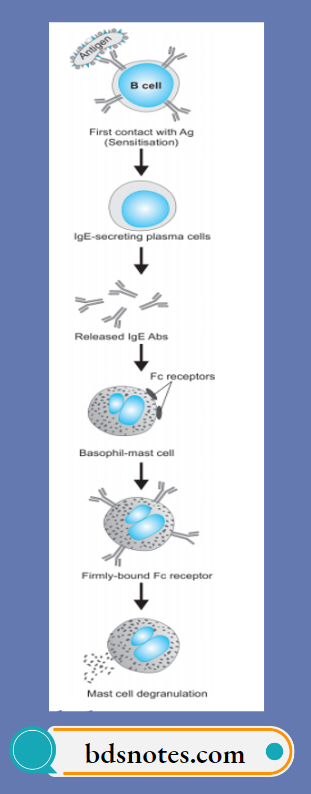
Type 1 reaction includes participation by B lymphocytes and plasma cells, mast cells and basophils, neutrophils, and eosinophils. The underlying mechanism is as follows:
- During the first contact of the host with antigen, sensitization takes place. In response to initial contact with antigen, circulating B lymphocytes get activated and differentiate to form IgE-secreting plasma cells. IgE antibodies so formed bind to the Fc receptors present in plenty on the surface of mast cells and basophils, which are the main effector cells of type I reaction. Thus, these cells are now fully sensitized for the next event.
- During the second contact with the same antigen, IgE antibodies on the surface of mast cells—basophils are so firmly bound to Fc receptors that it sets in cell damage i.e. there is membrane lysis, influx of sodium and water and degranulation of mast cells, and basophils.
- Released granules contain important chemicals and enzymes with proinflammatory properties histamine, serotonin, vasoactive intestinal peptide (VIP), chemotactic factors of anaphylaxis for neutrophils and eosinophils, leukotrienes B4 and D4, prostaglandins (thromboxane A2, prostaglandin D2, and E2) and platelet-activating factor.
The effects of these agents are:
- Increased vascular permeability
- Smooth muscle contraction
- Early vasoconstriction followed by vasodilatation
- Shock
- Increased gastric secretion
- Increased nasal and lacrimal secretions
- Increased migration of eosinophils and neutrophils at the site of local injury as well as their rise in the blood (eosinophilia and neutrophilia).
Examples of Type 1 Reaction
Based on the types of Type 1 hypersensitivity reaction, i.e. systemic or local anaphylaxis the examples are:
Systemic Anaphylaxis
- Administration of antisera, For Example. anti-tetanus serum (ATS).
- Administration of drugs, For Example. penicillin.
- Sting by a wasp or bee.
Anaphylaxis treatment protocol
Local Anaphylaxis
- Hay fever (seasonal allergic rhinitis) due to pollen sensitization of conjunctiva and nasal passages.
- Bronchial asthma due to allergy to inhaled allergens like house dust.
- Food allergy to ingested allergens like fish, cow’s milk, eggs, etc.
- Cutaneous anaphylaxis due to contact of antigen with skin characterized by urticaria, wheal, and flare.
- Angioedema is an autosomal dominant inherited disorder characterized by laryngeal edema, and edema of eyelids, lips, tongue, and trunk.
Leave a Reply