Vitamins Explained: Definition, Composition, and Classification Made Simple
Define and classify vitamins.
Answer.
Definition Of Vitamins
- Vitamins are defined as organic compounds occurring in natural foods, which are required in minute amounts for normal growth, maintenance and reproduction
- Chemically they were found to be amines and they were vital to life, hence Funk named them “vitamins”
Classification Of Vitamins
Read And Learn More: BSc Nursing 1st Year Nutrition And Biochemistry Previous year Question and Answers
“Understanding vitamins through FAQs: Q&A explained”
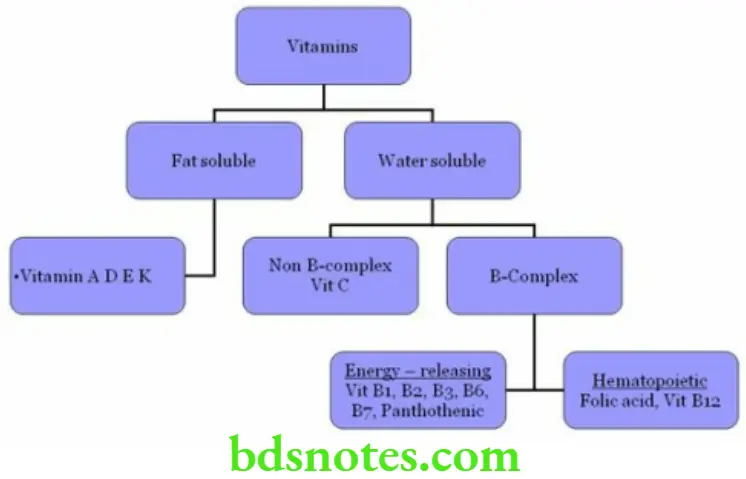
Fat-soluble Vitamins
- Vitamin A, D,E and K are known as fat or lipid – soluble vitamins.
- Their availability in the diet, absorption and transport are associated with fat.
- They are soluble in fats and oils, and also in the fat solvents (alcohol, acetone, etc.) They are stored in the liver and adipose tissue.
“Role of vitamins as micronutrients: Questions answered”
Vitamins: definition and classification made easy
They are not readily excreted in urine. But with feces via the enterohepatic circulation
Excess consumption may lead to accumulation and toxic effects.
“Importance of studying vitamins for better health outcomes: Questions explained”
“Common challenges in understanding vitamin types effectively: FAQs provided”
Water Soluble Vitamins
- Heterogeneous group of compounds since they differ chemically from each other.
- Common character – solubility in water.
- Readily excreted in urine and not toxic to body.
- Not stored in large quantities in the body (except vitamin B12).
“Steps to explain the definition of vitamins: Organic compounds vs minerals: Q&A guide”
Classification and chemical nature of vitamins
- Stores depleted within weeks and deficiency symptoms results.
- Hence need to be continuously supplied through the diet.
Leave a Reply