General Surgery Notes
Healing:
1. Healing by primary intention occurs in a wound that is
- Clean and uninfected
- Surgically incised
- Without much loss of cells and tissue
- Edges of the wound are approximated by surgical sutures
2. Primary closure of incised wounds must be done within 6 hrs.
3. Healing by secondary intention occurs in a wound that is
- Open with a large tissue defect and infected
- Not approximated by sutures but is left open
- Having extensive loss of cells and tissues.
“Understanding general surgery through FAQs: Key concepts and study tips explained”
Rule of nines:
The ‘rule of nines’ may be used to estimate the total body surface area burnt in adults.
- Head: 9%
- Right upper limb: 9%
- Left upper limb: 9%
- Right lower limb: 18%
- Left lower limb: 18%
- Anterior trunk: 18%
- Posterior trunk: 18%
- Genitalia: 1%
“Importance of studying general surgery notes for medical students: Questions explained”

“Common challenges in mastering general surgery effectively: FAQs provided”
The effects of burn injury are:
1. Local:
- Cell necrosis
- Collagen denaturation
- Infection
- Inflammation
2. Systemic:
- Hypovolemia
- Gastric or duodenal ulcer
- Multiple organ failure
- Hypoxia.
“Factors influencing success with general surgery knowledge: Q&A”
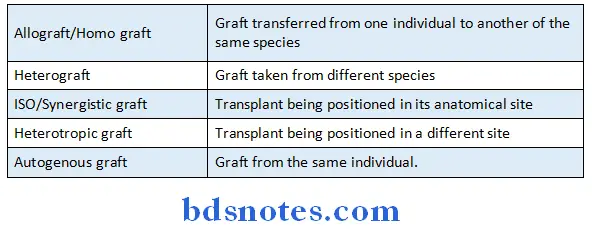
Types of grafts:
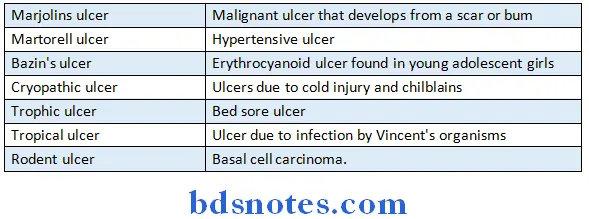
Ulcers:
“Steps to explain general surgery: Anatomy vs techniques vs postoperative care: Q&A guide”
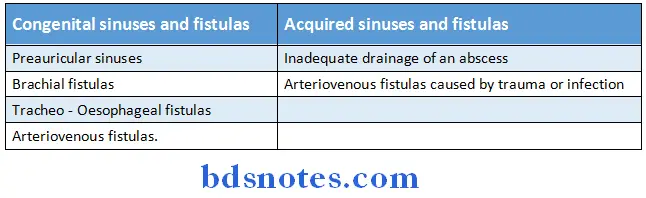
Sinus and fistula:
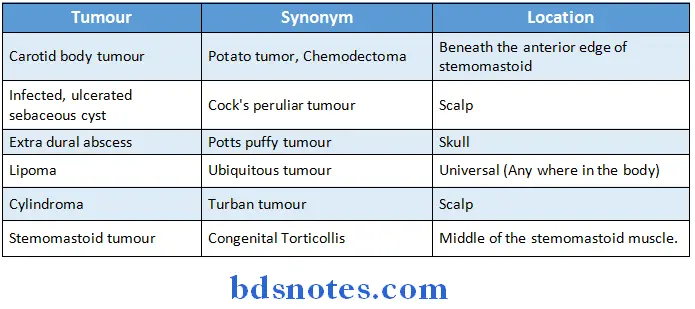
Common tumors and their location:
“Role of preoperative care in ensuring successful surgeries: Questions answered”
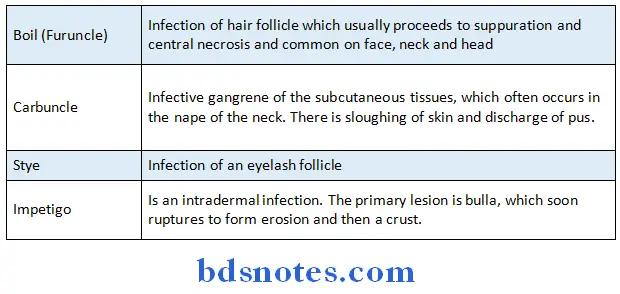
Common staphylococcal skin infections:
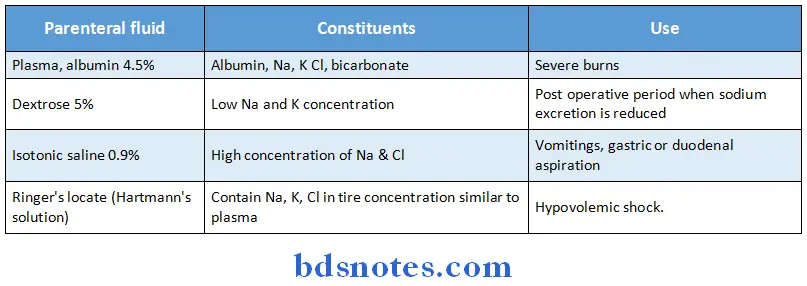
Fluid management:
“How does surgical anatomy differ from clinical anatomy? FAQ explained”
Carcinoma of lip and tongue:
- The majority of tongue cancers occur in the middle third of the lateral margins followed by posterior and anterior thirds of the tongue.
- Early lymph node metastasis and invasion of the floor of the mouth are common.
- It is mostly epidermoid carcinoma and accounts for more than half of the intraoral carcinomas.
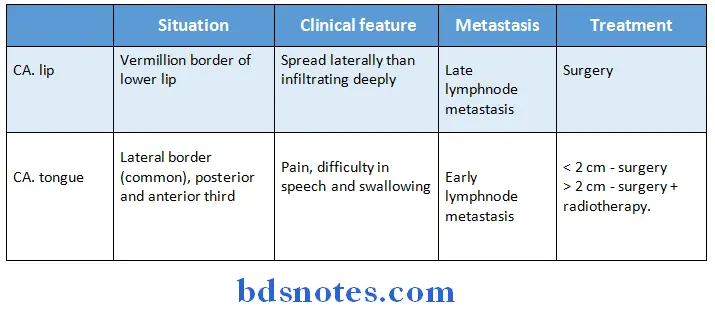
- Commando operation – Block dissection of lymph nodes along with Hemiglossectomy.
- Brachytherapy – Interstitial (or) intracavitary radiotherapy when the growth is more than 1 cm in diameter in the anterior 2/3rd of the tongue.
- Teletherapy – External beam radiation is used when the growth is more than 2 cm in the posterior third of the tongue.
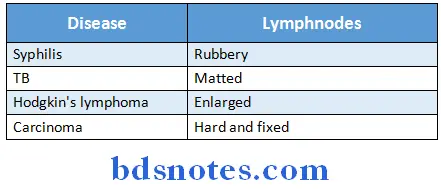
Types of Lymph nodes:
“Early warning signs of gaps in understanding general surgery basics: Common questions”
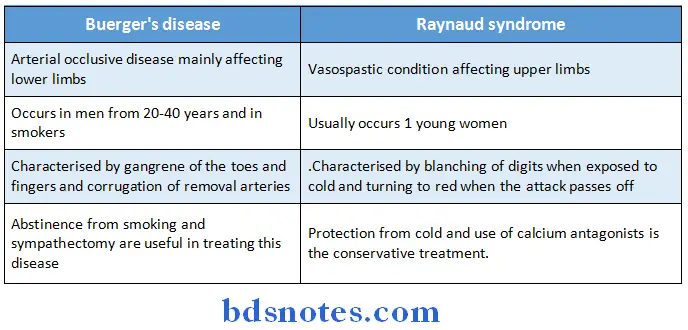
Buerger’s Disease:
- Thromboangitis obliterans (Buerger’s disease) is an occlusive disease of small and medium-sized arteries of both upper and lower limbs.
- The disease commonly occurs in men who are chronic smokers.
- The disease is characterized by gangrene of toes and fingers with characteristic corrugation of femoral arteries and distal arterial occlusions.
- Deep vein thrombosis is a serious life-threatening condition characterized by the development of the postthrombotic limb and venous ulceration.
- The frequent location is the lower limb and the commonest complication is pulmonary embolism.
- The signs and symptoms are swelling, pain, dilated superficial veins, calf tenderness, and redness.
Risk factors for deep vein thrombosis are:
- Old age
- Recent orthopedic surgery of lower limbs
- Oral contraceptives
- Thrombophilia
- Nephrotic syndrome
- Sedentary lifestyle.
“Differential applications of open vs laparoscopic surgeries: Questions answered”
Venous ulcer:
- Venous ulcer is the most common ulcer of the leg.
- The Basic cause of venous ulcers is abnormal venous hypertension in the lower third of the leg, ankle, and dorsum of the foot.
- This ulcer may be associated with demonstrable varicose veins or may follow thrombosis and phlebitis in the deep and perforating veins.
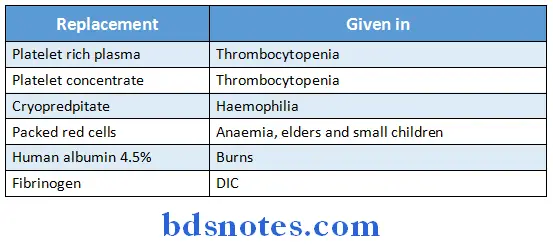
Blood transfusion:
- Massive blood transfusion-350 mL/5 min.
- SAG-M blood-deficient in albumin.
- Stored plasma is deficient in factors V and VIII.
- Post-transfusion hepatitis is most common in packed cell volume transfusion.
- Plasma transfusion is indicated when the area of burns exceeds 10%.
- The most common cause of pulmonary edema is circulatory overload from parenteral therapy.
- The most common reaction after blood transfusion is pyrexia.
- Hypocalcemia- below 2.5 mg/100 mL of calcium in blood inhibits blood coagulation.
- Clot retraction-abnormal Inpolycythemia, prothrombenimia, and multiple myeloma.
- Bleeding time gives the reaction of blood vessels to hemostasis.
- Clotting time to 15 mm.
- Prothrombin time-raised in warfarin treatment, liver disease & vitamin K deficiency.
- Prothrombin time-11 to 12.5 sec
- Deficiency of factors I, II, V, VII, and X increase prothrombin time.
- Partial prothrombin time for integrity and activation of the intrinsic system.
- Clot retraction to half of its mass occurs by 1 hr and is completed by 24 hr.
- Bleeding time-2.5 to 9.5 min (method). Duke method-1.5 to 4.5 minutes
- Surgery is contraindicated when PT is more than double the control.
- For factor IX deficiency, factor conjugate (II+VII+IX+X) is given.
- Von Willebrand disease is characterized by normal prothrombin time and increased partial prothrombin.
- Long-term use of phenytoin is associated with gum hypertrophy, osteomalacia, and folate deficiency.
- One stage of prothrombin tissue is an index of the function of the intrinsic pathway.
- Treatment for hereditary spherocytosis-splenectomy.
- Desferroxamine-indicated in iron overload following transfusion as seen in thalassemia etc.
- The commonest site of hemorrhage in hemophilia-knee.
- Conversion of celcius scale to Fahrenheit: Cel +32= Fahrenheit x (5/9).
“Can targeted interventions improve outcomes using general surgery notes? FAQs provided”
Tracheostomy:
- Done at the level of the 2nd and 3rd tracheal ring.
- Emergency-vertical incision – Scarring – lower border of cricoid to sternal notch.
- Elective-horizontal incision – No scan -5 cm long about 2 finger breadth above sternal notch.
- If done at 1 string or cricoid-stenosis
- At the 5th to 7th ring -the trachea is difficult to reach due to the presence thick layer of fat.
- Cricothyrotomy through the cricothyroid membrane.
- Primary hemorrhage-during surgery
- Secondary hemorrhage after 7 to 15 days due to infection.
- Reactionary-within 24 hr (1 to 5 hr)-due to loss of clot/ligature step.
- Burns-albumin transfused.
- Hypovolemic shock-Ringer’s lactate.
- Patients under shock should have legs elevated 20 degrees with the head remaining elevated.
- Tachycardia and tachypnea represent the earliest signs of shock.
- HCO3 ion is absent in Ringer’s solution and Darrow’s solution.
- K+ rich-Darrow’s solution.
- SAG-M blood-blood-plasma + mannitol
- Ringer’s lactate-resembles plasma; IV fluid of choice in cholera, and prevention of hemorrhagic shock.
- IV fluid that reduces cerebral edema-mannitol
- 1 liter dextrose-200 calories of energy.
- Vascular space-5% of the body weight.
- Extravascular space-20% of body weight.
- Hyperglycemia in trauma is due to:
- Catecholamine release
- Gluconeogenesis
- Rule of nine-Wallace
- To calculate the severity of burns
- Head and neck-9%
- Upper limb (R&L)-9×2-18%
- Thorax (front & back)-9 x 2= 18%
- Abdomen (front and back) = 18%
- Lower limb (front & back, right & left) = 9×4 = 36%.
- External genitalia -9%.
“Asymptomatic vs symptomatic effects of ignoring general surgery principles: Q&A”
- Muir and Barclay formula for determining fluid replacement:
- 1 ration = % of burn x body wt/2
- The head and trunk in severely burned patients account for 45% of the total body surface.
- Fluid replacement in burns
- Fluids-for >10% burns in children and > 15% burns in adults.
- Through nasogastric tube->35% burns.
- Blood replacement therapy burns 25 to 50% burns.
- Cleft lip-treated surgically at 3 months of age.
- Cleft palate treated surgically at 15 months to 2 years of age.
- Rule of 10-for cleft lip repair Hemoglobin->10% Age-10 weeks
- Weight->101b Total count-<10,000/cubic mm of blood.
- The salmon patch disappears by the first year of age.
- Port wine stain is present at birth and persists through life.
- The tensile strength of a wound reaches that of normal tissue by 2 years and 50% of normal within 6 weeks.
- Crushed and devitalized wounds should be sutured by delayed primary suturing 4 to 6 days after injury.
- The greatest retarder of wound healing is residual infection.
- Enzymatic debrirna of a wound-hyaluronidase.
- Pyrexia due to wound infection on the 5th postoperative day.
- Nerve repair in an infected wound occurs by secondary intention.
- Gaping of scalp wounds occurs due to injury to the galea aponeurotica.
- Growth of epithelium over an ulcer and growth of nerve after nerve suturing- 1 mm/day.
“Steps to apply general surgery knowledge in clinical practice: Diagnosis vs treatment: Q&A guide”
- Structure preserved in Crile’s operation-phrenic nerve; and in functional neck dissection-accessory nerve and SCM, IJV.
- Raynaud’s phenomenon is associated with atherosclerosis, scleroderma, and Buerger’s disease.
- Signs and symptoms-increased vasospasm of peripheral arteries (hands), more in women, occurs in response to beta-blockers and cold exposures.
- Treatment is the use of nifedipine.
- Buerger’s disease is seen in men and affects lower limbs.
- The common site of an aortic aneurysm is the abdominal aorta below the level of the renal arteries.
- Brodie’s Trendelenburg test-sapheno femoral delay.
- Lumbar sympathectomy is done for rest pain and ulceration.
- Virchow’s triad of venous thrombosis:
- Changes in the vessel wall.
- Reduced rate of blood flow.
- Increased coagulability of blood.
- Charcot’s triad pain, jaundice, and fever as seen in acute cholangitis.
- Universal antidote-charcoal, tannic acid, milk of magnesia.
- White leg-femoral vein thrombosis+ lymphatic obstruction.
- Painless effusion of joint in congenital syphilis is Charcot’s joint.
- Congenital lymphoedema-Milroy’s disease.
- Meleney’s ulcer-infected post of wounds.
- Martorell’s ulcer-ulcers in hypertensive patients.
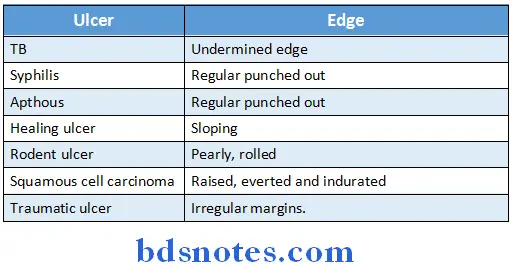
- Everted edges-squamous cell carcinoma.
- Raised and rolled out pearly edges-rodent ulcer/basal cell carcinoma.
- Flask-shaped femur-Gaucher’s disease.
- Hormone increased in pituitary adenoma-prolactin.
- Burst open periosteum-osteosarcoma -> Sunburst appearance
- Blowout distension-aneurysm.
- Cigarette paper appearance-pytriasis rosea.
- Rope sign-acute poliomyelitis is associated with weakness in the larynx and hyoid muscles.
- Branchial cyst removal/Sistrunk operation involves damage to the accessory and hypoglossal nerve.
“Role of imaging techniques in planning surgical procedures: Questions answered”
- Cystic hygroma-usually seen in the lower 1/3rd of the posterior triangle.
- Trench foot-frostbite.
- Most common primary bone tumor in children-osteosarcoma.
- Cardinal feature of parkinsonism-akinesia.
- Vomiting is associated with hypochloremic and hyponatremic alkalosis.
- Surgical risk for patients with organic heart disease depends on the cardiac reserve.
- In tetanus-period of onset is the time interval between the first symptom and first reflex spasm.
- The median nerve is the least involved in leprosy.
- Critical value of serum calcium-4mg%.
- Serum lactates-elevated in metabolic acidosis.
- Bee venom-neutralized with the application of soda bicarbonate.
- Third space-transcellular fluid.
- The commonest complication of surgical removal of ranula is injury to the lingual nerve.
- Eschrisch’s sign-protrusion of lips due to tapping of skin at angle of mouth-tetany.
- The commonest site of thyroglossal cyst-subglottic level.
- Neuroblastoma tends spontaneous regression.
General Anesthesia:
General Anesthesia Halothane:
- Sensitizes heart to adrenaline
- Used in patients with bronchial asthma, the requirement of a bloodless field, and plastic surgery. Disadvantage-causes CVS depression.
- Seizures, hemorrhagic shock, muscle relaxation – cyclopropane.
- N2O causes Megaloblastic anemia
- Ketamine used in shock
- Thiopental administered by rectal route
- % of N2O used to produce adequate dental anesthesia but maintain adequate patient cooperation -35%. Etonox -50% O2 + 50% N2O
- Antagonist to succinylcholine – neostigmine
- Diethyl ether, if used alone, produces the most reliable eye signs
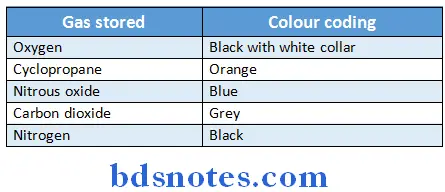
Color coding of storage cylinders:
“How does postoperative care reduce risks of complications? FAQ explained”
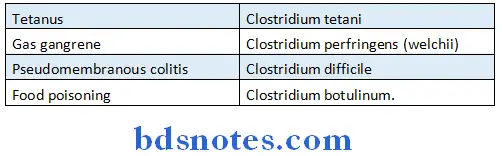
Clostridium diseases:
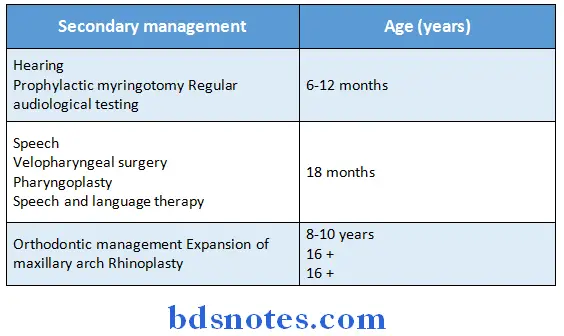
Cleft lip and cleft palate:
- Cleft lip repair:
- Millard’s rotation advancement flap surgery
- Tennison – Randall triangular flap method.
- Cleft lip repair is commonly performed between 3 – 6 months of age, whereas cleft palate repair is frequently performed between 6-8
months i.e., before the child acquires the bad habit of nasal speech. - A cleft lip is repaired according to the rule of tens i.e. when the baby is 10 lbs, 10 weeks old, and has haemoglobin more than 10 gm%.
- Usually, clefts of soft palate are repaired at 6 months whereas hard palates are repaired at 12-15 months.
“Early warning signs of complications from ignoring surgical protocols: Common questions”
- Cleft palate – Ward wills operation, Y-V push-back palatoplasty.
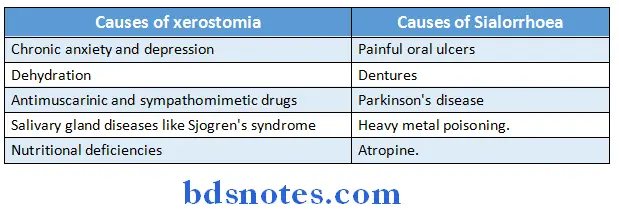
Xerostomia and Sialorrhea:
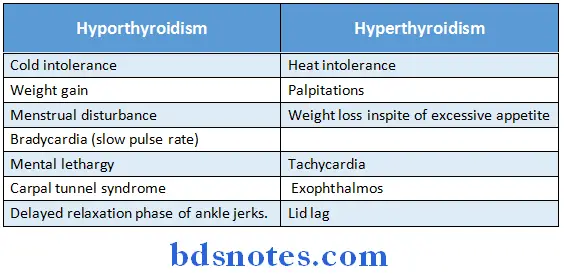
Signs and symptoms of hypo and hyperthyroidism:
Carcinoma of the thyroid:
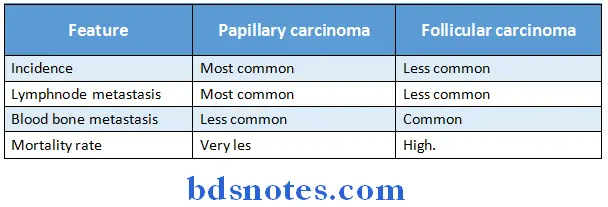
“Asymptomatic vs symptomatic effects of outdated surgical practices: Answered”
Commonest Site Of Lesion
Erysipelas: Face and scrotum
Cellulites: Scrotum and scalp
Sebaceous cyst: Scalp, face, scrotum
Keloid: Sternum Face, neck
Lymphangioma & Hemangioma: Tongue, Lip
Carbuncle: Back, Nape of neck and shoulders
Implantation Dermoid: Hand and finger
Dermoid cyst: External angle of the eye, any line of fusion
Kaposi’s sarcoma: Limbs
Granuloma pyogenic: Face, fingers, toes
Corn: Toes, feet
Malignant melanoma:
- Males – trunk
- Females – leg
Hyperpigmentation in:
- Exposed areas and creases
- Addison’s disease of palms
“Differential applications of conservative vs surgical treatments: Q&A”
Pregnancy tumor: Gums and Tongue
Signs:
Battle’s Sign:
In the posterior cranial fossa fracture, behind foramen magnum, Ecchymosis appears at the tip of Mastoid in 3-4 days
Acute appendicitis:
- Rovsing’s sign – Pressure in the left iliac fossa causes pain in the right iliac fossa
- Murphy’s sign – Catch of breath in inspiration
- Moyniham’s sign: in acute cholecystitis
Chvostek’s sign:
- Tapping the side of the facial nerve
- Elicits spasm in latent tetany
“Can preventive measures reduce risks of surgical errors? FAQs provided”
Trousseau’s sign:
- Eliciting carpal spasm in latent
- Tetany by raising the pressure in the cuff around the arm.
Rope sign:
- Acute poliomyelitis
- And larynx due to weakness of Hyoid muscles.
- Kerning sign is seen in Meningitis – Brudginski’s sign
- Flag sign – Seen in Kwashiorkor
- Coleman’s sign – A hematoma seen in the floor of the mouth due to fracture of the body of the mandible.”
Leave a Reply