Back Pressure Porosities In Casting
Question 1. Write a short note on back pressure porosities in casting.
Or
Write a short note on back pressure porosity.
Or
Answer briefly back pressure porosity as a casting defect.
Answer:
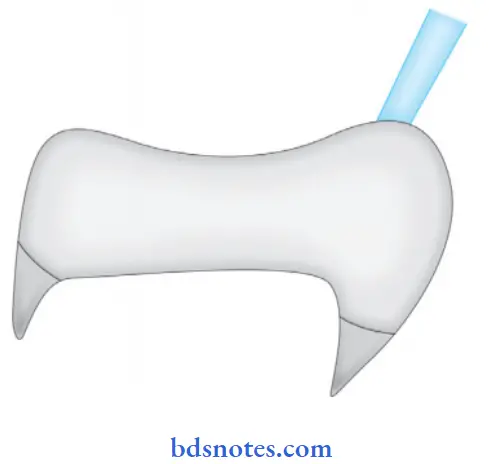
It is also known as entrapped air porosity. Back pressure porosity occurs on the inner surface of the casting as a large concave depression.
Back Pressure Porosity Causes
Read And Learn More: Dental Materials Question And Answers
“Understanding back pressure porosities through FAQs: Causes, effects, and prevention explained”
“Importance of studying back pressure porosities for dental professionals: Questions explained”
Cause of Porosity:
Due to the inability of air to escape through the investment and accumulation of an air pocket which exerts pressure back toward the sprue and button.
Mechanism of Porosity:
- Air is trapped in the mold and is unable to escape. Sprue pattern length should be adjusted so that there is not more than ¼” thickness of the investment between the bottom of the casting ring and the wax pattern.
- When molten metal enters the mold, the air inside is pushed out through the porous investment at the bottom. If the bulk of investment is too great, the escape of air becomes difficult causing increased pressure in a mold. Gold will then solidify before the mold is completely filed resulting in porous casting with rounded short margins.
“Common challenges in preventing back pressure porosities effectively: FAQs provided”
Casting Failures & Defects in Dentistry
The appearance of Porosity:
This porosity is found as a pocket on the surface of the crown or MOD casting.
Avoided by:
- Using adequate casting force.
- Use of investment of adequate porosity
“Factors influencing success with back pressure porosity knowledge: Q&A”
Back Pressure Porosity In Sand Casting
- Place a pattern not more than 6 to 8 mm away from the end of the ring.
- By providing vents in large castings.
Leave a Reply