Graves’ Disease: Symptoms, Causes, and Treatment Overview
Question. Write a short note on Grave’s disease.
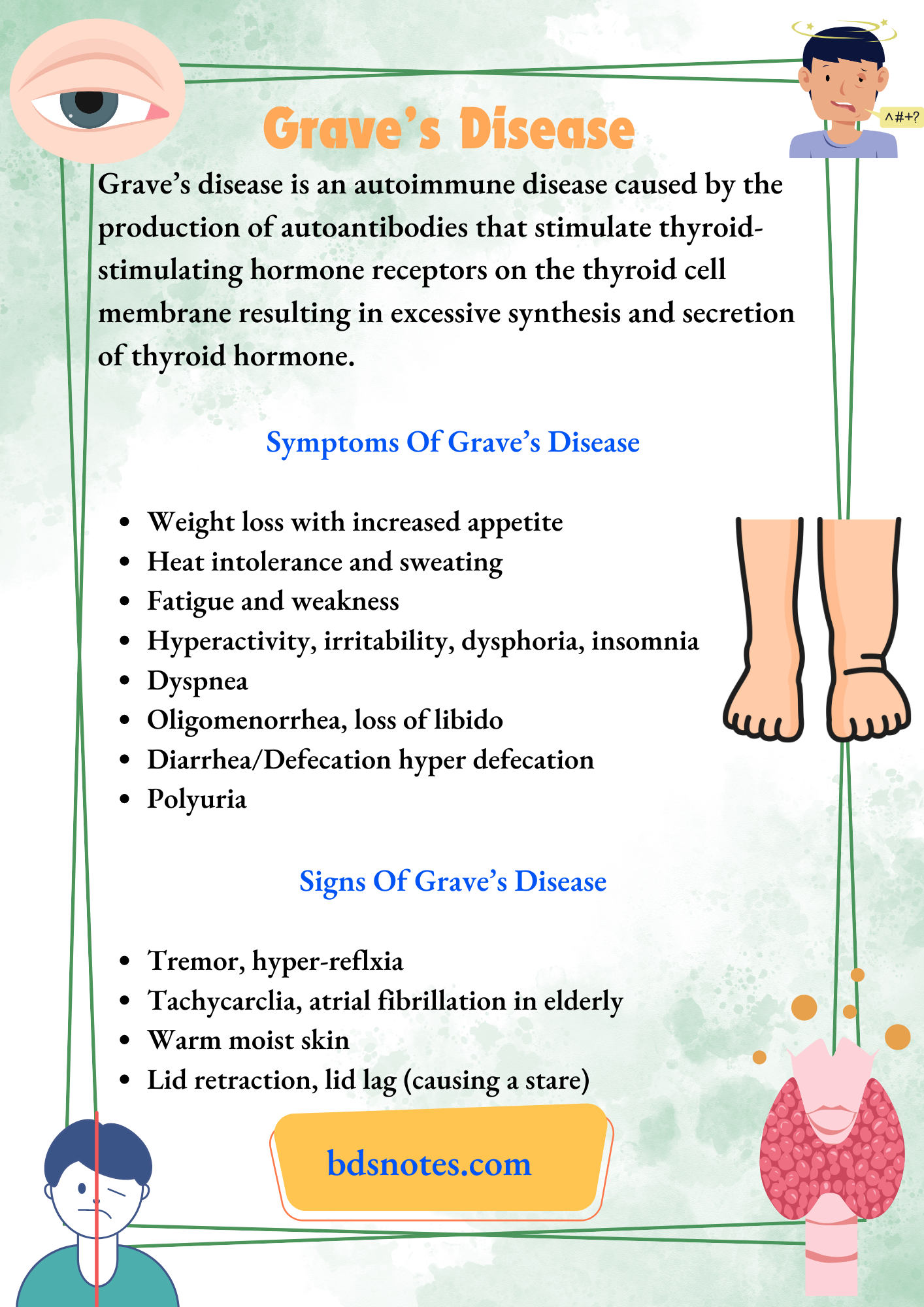
Answer. Grave’s disease is an autoimmune disease caused by the production of autoantibodies that stimulate thyroid-stimulating hormone receptors on the thyroid cell membrane, resulting in excessive synthesis and secretion of thyroid hormone.
Graves’ Disease: Symptoms, Causes, and Treatment Overview
Risk Factors Of Grave’s Disease
- Genetic susceptibility: The role of hereditary factors is evidenced by increased incidence of other autoimmune disorders in members of patient’s families.
- Emotional stress
- Gender: Females are more prone than men (7 to 10:1) ratio.
- Pregnancy: iodinecontaining drugs
- Iodine and drugs: Amiodarone and iodinecontaining contrast media may precipitate Graves’ disease.
- Irradiation, e.g. radioactive iodine for multinodular goiter.
Symptoms of Graves’ Disease and Diagnosis
Symptoms Of Grave’s Disease
- Weight loss with increased appetite
- Heat intolerance and sweating
- Fatigue and weakness
- Hyperactivity, irritability, dysphoria, insomnia
- Dyspnea
- Oligomenorrhea, loss of libido
- Diarrhea/Defecation hyper defecation
- Polyuria
Signs Of Grave’s Disease
- Tremor, hyper-reflxia
- Tachycarclia, atrial firillation in elderly
- Warm moist skin
- Lid retraction, lid lag (causing a stare)
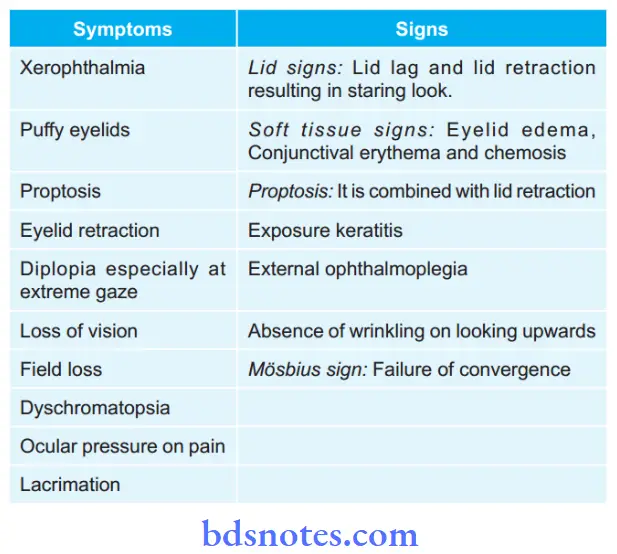
- Thyroid ophthalmopathy is a specific feature of Grave’s disease for which signs and symptoms are as follows:
Investigations Of Grave’s Disease
- T3 and T4 both are elevated.
- Low TSH or become undetectable
- 131I uptake is increased, i.e. greater than 35% at 5 hours
- Serum cholesterol is low
- ECG shows tachycardia, arrhythmias, STT changes
- Ultrasonography of the thyroid shows different goiter
Treatment For Discomfort
- Artificial tears should be given for the day, i.e. methylcellulose is given.
- Simple eye ointment should be given for the night
- Patients should use dark glasses with side frames.
- No smoking
Medical Therapy of Grave’s Disease
- Reduction of morning lid edema by sleeping on the bed with its head slightly raised.
- Prednisolone 60 mg daily is given.
- Anti-thyroid drugs such as carbimazole i.e. 40–60 mg/day, methimazole, i.e. 100–150 mg 8 hourly, and propylthiouracil, i.e. 300–450 mg/day can be given depending on the severity of the disease.
- Drugs should be gradually decreased for 4 to 8 weeks based on FT4 levels.
- When FT4 levels are normal carbimazole 5–15 mg/day or propylthiouracil 50mg/day is given.
- Drugs can be given for 1–2 years by regular checking of FT4 and TSH levels.
- For symptomatic relief beta-blockers such as propanolol 80–160 mg daily is given.
- It is given for 2–3 weeks along with anti thyroid treatment.
- It relieves symptoms such as anxiety, tremors, and tachycardia.
- Radioactive iodine, i.e. 131I leads to the destruction of thyroid cells and is given with antithyroid drugs.
Surgery Of Grave’s Disease
- Subtotal thyroidectomy is done in severely affcted cases.
- Before surgery patient should be made euthyroid by beta blockers and antithyroid drugs.
- Two weeks before the surgery drugs should be stopped and lugol iodine is given to reduce the vascularity.
Leave a Reply