Organic Nitrates In Angina
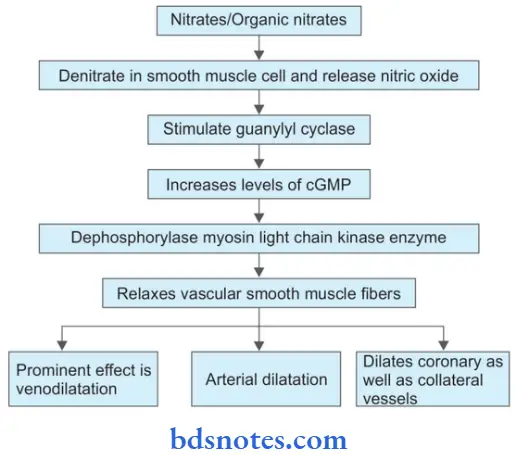
Question 10. Write A Short Note On The Basis Of Use Of Nitrates In Angina.
Or
Write Short Note On Organic Nitrates In Angina.
Answer:
Following is the basis of the use of nitrates in angina:
Question 11. Write A Note About Why Nitroglycerine Tablets Are Effective When Given Sublingually In A Patient Of Angina.
Answer:
Nitroglycerine has a very high first-pass metabolism. So the drug achieves low plasma concentration when given orally. Thus its bioavailability is less through the oral route. To circumvent this drug is administered by the sublingual route.
Through the sublingual route drug directly reaches the blood vessel and has a faster onset of action to stop an acute attack of angina.
Self-administration of drugs is possible by sublingual route.
Organic Nitrates in Angina: Mechanism of Action and Therapeutic Use
Question 12. Enumerate The Drugs Used In The Treatment Of Angina Pectoris. Describe The Uses Of Β (Beta) Blockers.
Answer:
Enumeration of Drugs Used in Treatment of Angina Pectoris
- Nitrates:
- Short-acting: Glyceryl trinitrate
- Long-acting: Isosorbide dinitrate, Isosorbide mononitrate, Erythrityl tetranitrate, Pentaerythritol tetranitrate.
- β Blockers: Propranolol, metoprolol, atenolol, and others
- Calcium channel blockers: Verapamil, diltiazem, nifedipine, amlodipine, lacidipine.
- Potassium channel opener: Nicorandil
- Others: Dipyridamole, Trimetazidine, Ranolazine.
Uses Of β Blockers
Organic Nitrates for Angina Pectoris: Nitroglycerin and Isosorbide
- Hypertension: β blockers are used to treat all grades of hypertension. They are also indicated in angina, myocardial infarction, and cardiac arrhythmias.
- In the prophylaxis of angina and myocardial infarction: β blockers decrease the oxygen demand of the myocardium and decrease the heart rate. These drugs reduce the frequency of angina attacks. They are indicated in the acute phase of myocardial infarction so that they limit the size of the infarct.
- In cardiac arrhythmias: They are indicated in atrial arrhythmias i.e. atrial fibrillation, atrial flutter, and paroxysmal supraventricular tachycardia.
- Congestive cardiac failure: Chronic usage of β blockers reduces the rate of mortality during chronic heart failure.
- Pheochromocytoma: These drugs control cardiac manifestations produced by pheochromocytoma.
- Glaucoma: They decrease intra-ocular pressure by decreasing the secretion of aqueous humor. Timolol is the choice of drug.
- In the prophylaxis of migraine: They decrease the frequency of migraine headaches.
- Hyperthyroidism: Signs and symptoms of hyperthyroidism decrease due to the blockade of β receptors.
- Essential tremors: Propranolol provides relief in tremors.
- Anxiety: It acts as an anti-anxiety drug.
- Alcohol withdrawal: Propranolol provides benefits for alcohol withdrawal.
- Dissecting aortic aneurysm: β blockers reduce cardiac contractility as well as the development of pressure during systole.
Leave a Reply