Nitrates In Angina Mechanism Of Action
Describe Brief Mechanism Of Action, Therapeutic Uses, Adverse Reactions, And Preparation Of Nitrates When Used For Angina.
Answer:
Nitrates In Angina Mechanism Of Action
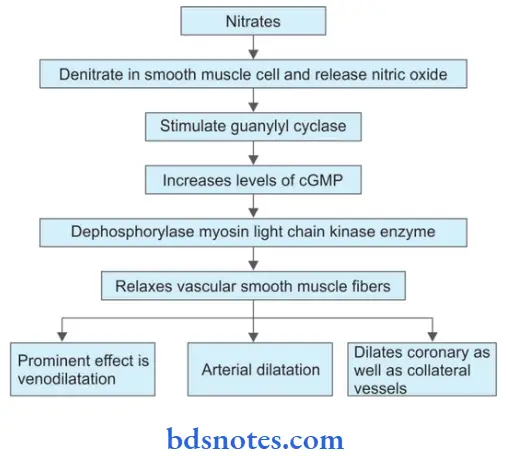
- Nitrates reduce coronary vasospasm and increase the perfusion of the myocardium by relaxing the coronary arteries.
- Organic nitrates are rapidly denitrified enzymatically in a smooth muscle cell to release reactive free radical nitric oxide, which activates cytosolic guanylyl cyclase.
- This leads to an increase in cGMP, which causes dephosphorylation of myosin light chain kinase through cGMP protein kinase.
- There is reduced availability of active phosphorylated myosin light chain kinase (MLCK).
- So myosin fails to interact with actin to cause contraction, and relaxation occurs. cGMP also reduces calcium entry and leads to relaxation.
Nitrates In Angina Therapeutic Uses
- Angina:
- Nitroglycerine is used in the acute attack of angina.
- Nitrates are effective in classical as well as variant angina.
- For aborting or terminating the attack sublingual glycertrinitrate or isosorbide dinitrate should be taken.
- Nitrates increase exercise tolerance and postpone ECG changes of ischemia.
- Longer-acting formulations of glycertrinitrate or other nitrates are used on a regular schedule for chronic prophylaxis
- Nitrates are effective in unstable angina as well.
- Myocardial infarction: Carefully titrated IV infusion of glycerin trinitrate to avoid tachycardia and started soon after the arterial occlusion can relieve pulmonary congestion and limit the area of necrosis by favorably altering oxygen balance in a marginally partial ischemic zone by reducing cardiac work.
- Congestive cardiac failure and acute ventricular failure: Nitrates provide relief by venous pooling of blood which decreases preload. This increases end-diastolic volume. This leads to an improvement in left ventricular function.
- Interventional cardiac procedures: Nitrates are used as adjuvant drugs for dilating coronaries in percutaneous coronary angioplasty.
- Biliary colic: Sublingual nitrates subsides biliary colic which is produced due to disease or morphine.
- Esophageal spasm: Nitrates before a meal helps in feeding in esophageal achalasia and decreases esophageal tone.
- Cyanide poisoning: Nitrates produce methemoglobin which forms cyanomethamoglobin. After this sodium thiosulphate is given to the patient which prevents dissociation and release of cyanide by forming sodium Pharmacology thiocyanate which is poorly dissociated and is excreted in the urine.
Nitrates in Angina: Mechanism of Action and Therapeutic Effects
Nitrates In Angina Adverse Reactions
- Adverse reactions are due to vasodilatation. The following are the adverse reactions:
- Fullness in the head, throbbing headache, and some degree of tolerance develop on continued use.
- Flushing, weakness, sweating, palpitation, dizziness, and fainting.
- Methemoglobinemia. It can reduce the oxygen-carrying capacity of blood in severe anemia.
- Rashes are rare.
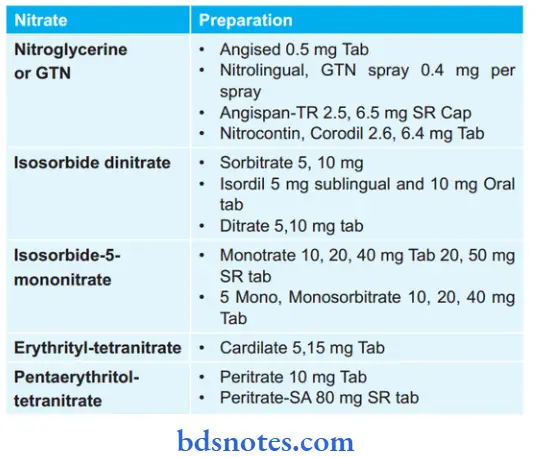
Nitrates In Angina Preparation
Leave a Reply