Protein Energy Malnutrition
Protein-energy malnutrition.
Answer.
Protein Energy Malnutrition
Protein Energy Malnutrition (PEM) is defined as a range of pathological conditions arising from coincident lack of varying proportions of protein and calorie, occurring most frequently in infants and young children and often associated with infection (WHO,1973) PEM affects children under 5 years of age belonging to the poor underprivileged communities.
Protein Energy Malnutrition Treatment and Nutritional Support
Under nutrition is a complex condition with multiple deficiencies such as proteins,energy and micro nutrient deficiencies often occurring together. According to WHO, malnutrition is an underlying factor in over 50 % of the 10 – 11 million yearly deaths of children under 5 years.
Classification of PEM
Protein energy malnutrition may be classified into three types as follows:
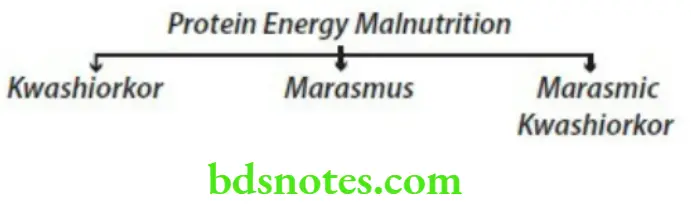
Kwashiorkor
Kwashiorkor is due to inadequate protein in the diet despite an adequate calories intake
Children are more affected by kwashiorkor than adult . it typically than adults. It typically starts after the child has breast milk has been replaced by diet with low in protein, although it can occur in infants if the mother is protein deprive.
Symptoms of Protein Energy Malnutrition and Diagnosis
Kwashiorkor is a form of severe protein malnutrition characterized by edema and an enlarged liver with fatty infiltrates.
It cause by sufficient calories intake but with insufficient protein consumpxion, which distinguishes it from marasmus.
Clinical Signs And Sympxoms
Growth failure
- Oedema of the face and lower limbs
- Muscle wasting
- Fatty liver
- Anorexia(loss of appetite)
- Diarrhoea
- Change in the colour, sparse, soft and thin hair.
- Change in the colour of the skin(hypo and hyperpigmentation)
- Anaemia
- Vitamin A deficiency
- Angular stomatitis(Cracks in the corners of mouth)
- Cheilosis (inflammation and cracks in lips)
- Moon face
Protein Energy Malnutrition (PEM): Causes, Symptoms, and Treatment
Marasmus
This is caused by severe deficiency of proteins and calories in the diet. The important features are as follows:
Severe wasting of muscles
- Loss of subcutaneous fat (Limbs appear as skin and bones)
- Skin is dry and atrophic
- Anaemia
- Eye lesions due to Vitamin A deficiency
- Irritability and fretfulness
- Diarrhoea
- Dehydration
- Body temperature is sub-normal
- Failure to thrive
- Wrinkled skin – Old man’s face
- Grossly underweight
PEM: Types, Causes, and Risk Factors
Understanding Protein Energy Malnutrition: Prevention and Care
Marasmic Kwashiorkor
Children suffering from this disease show signs of both kwashiorkor and marasmus.
Leave a Reply