Obesity
Write a note on obesity.
Answer:
- Obesity is defined as abnormal or excessive fat accumulation that presents a risk to health.
- A crude population measure of obesity is the body mass index (BMI), i.e. a person’s weight (in kilograms) divided by the square of his or her height (in meters).
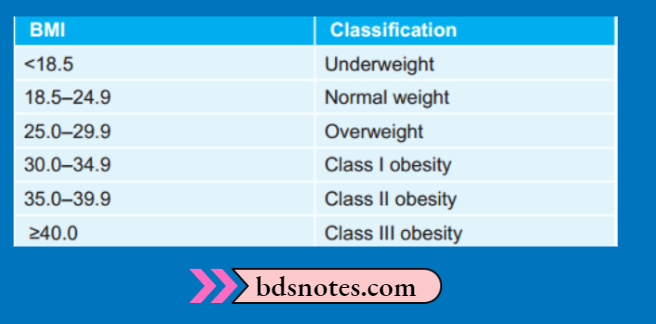
- A person with a BMI of 30 or more is generally considered obese. A person with a BMI equal to or more than 25 is considered overweight. In children, a healthy weight varies with age and sex.
Classification by World Health Organization and Published in 2000
The neurohumoral mechanisms that regulate body weight have three components:
- The afferent system generates humoral signals. It is constituted by leptin produced by adipocytes insulin produced by the pancreas and ghrelin produced by the endocrine cells of the stomach.
- The central processing unit is located primarily in the hypothalamus. It integrates afferent signals.
- The effector system carries out `orders’ from hypothalamic nuclei in the form of feeding behavior and energy expenditure.
Obesity Etiology
Obesity occurs when caloric intake exceeds utilization. This imbalance occurs in the following conditions:
- Due to overeating
- Due to inactivity and a sedentary lifecycle
- Genetic Predisposition to Obesity
- Diet derived from carbohydrates and fats than a protein-rich diet
- Secondary obesity occurs due to underlying diseases such as hypothyroidism, Cushing’s disease, insulinoma, etc.
Obesity Pathogenesis
Adipocytes are present in vascular and stromal compartments of the body. The most common function of adipocytes is to store fat, besides this, they release endocrine-regulating molecules.
The mass of adipose gets increased due to the enlargement of adipose cells because of excessive intracellular lipid deposition and also due to an increase in the number of adipocytes.
Obesity also occurs due to excessive consumption of nutrients. Recently two obesity genes are found, i.e. ob gene and db gene.
Obesity Metabolic Changes
- Hyperinsulinemia: Increased secretion of insulin is a feature of obesity. Most obese individuals have frank diabetes in spite of the presence of hyperinsulinemia. This occurs because of insulin resistance consequent to tissue insensitivity.
- Type 2 diabetes mellitus: Type 2 diabetes mellitus is associated with obesity
- Hypertension: Due to increased blood volume there is an association between hypertension and obesity.
- Hyperlipoproteinemia: Plasma cholesterol circulates in the blood as low-density lipoprotein which has circulating triglycerides. Obesity is associated with VLDL and LDL. Blood cholesterol levels are elevated in obesity.
- Atherosclerosis: Due to atherosclerosis and hypertension person is at risk of myocardial infarction and stroke in obese individuals.
- Nonalcoholic fatty liver disease: Obesity leads to nonalcoholic fatty liver disease which causes cirrhosis of the liver.
- Hypoventilation syndrome: There is hypersomnolence at night and day in obese individuals along with carbon dioxide retention, hypoxia, polycythemia, and right-sided heart failure.
- Osteoarthritis: These individuals develop degenerative joint disease which occurs due to wear and tear following trauma to joints due to high body weight.
- Cancer: Fatt diet derived from animal fat and meat shows a high chance of occurrence of cancer of the colon, breast, and prostate.
Leave a Reply