Oxygen-Haemoglobin Curve
Question 1. Oxygen-Haemoglobin Curve.
Answer:
Oxygen Haemoglobin Dissociation Curve:
- The relationship between the partial pressure of oxygen and the percentage saturation of haemoglobin with oxygen is explained graphically by the oxygen haemoglobin dissociation curve
- It is simoid shaped
- Lower part of curve
- Indicates dissociation of oxygen from haemoglobin
- Upper part of curve
- Indicates acceptance of oxygen by haemoglobin depending upon the partial pressure
- Lower part of curve
Amount of Oxygen Transported in this Form:
- Arterial blood – 19 ml per 100 ml of blood
- Venous blood – 13.88 ml per 100 ml of blood
“Understanding the oxygen-haemoglobin curve through FAQs: Composition, functions, and uses explained”
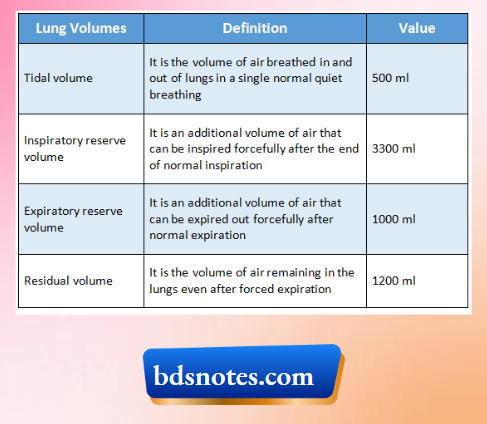
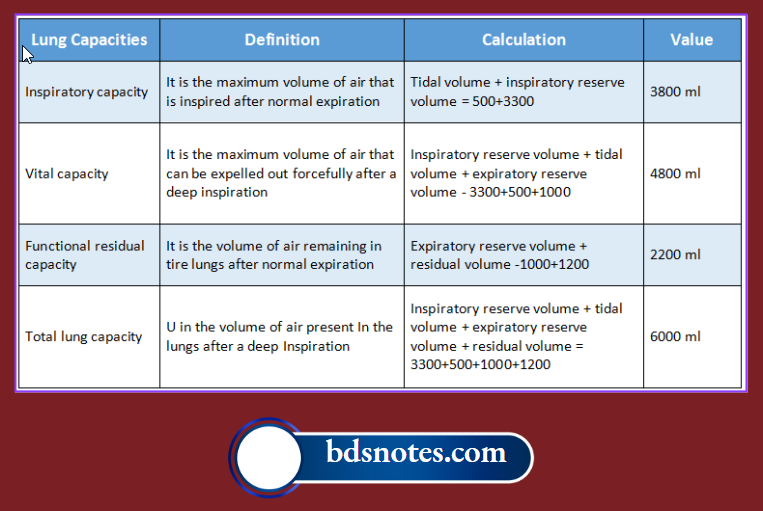
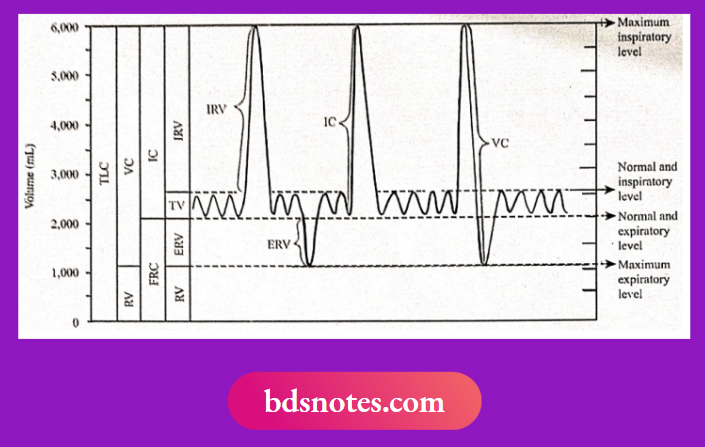
Question 2. Write a note on different lung volumes and capacities with the help of a diagram. (or) Draw a neat labelled diagram of spirogram and explain various lung volumes and capacities.
Answer:
Lung volumes:
“Importance of studying the oxygen-haemoglobin curve for medical students: Questions explained”
Lung capacities:
- They are combination of two or more lung volumes.
“Common challenges in mastering oxygen-haemoglobin curve notes effectively: FAQs provided”
“Factors influencing success with oxygen-haemoglobin curve studies: Q&A”
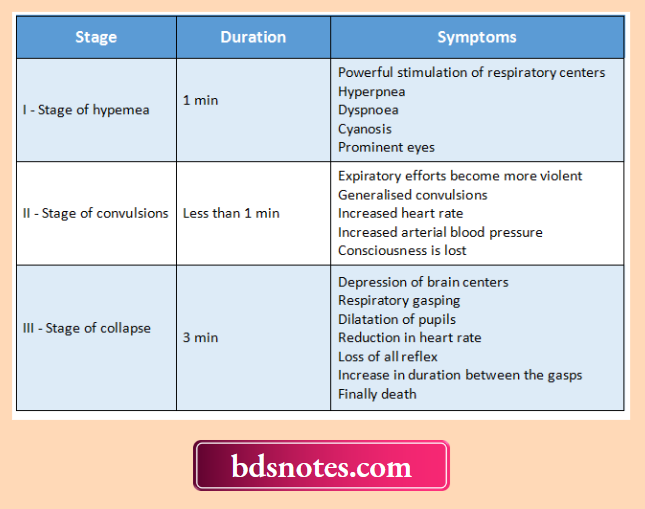
Question 3. What is asphyxia? What are the stages and symptoms of asphyxia?
Answer:
Asphyxia:
- It is the condition characterised by the combination of hypoxia and hypercapnia due to obstruction of air passage
“Steps to explain functions of the oxygen-haemoglobin curve: Oxygen loading vs unloading: Q&A guide”
Question 4. Define and discuss
1. Vital capacity
2. Apnoea
Answer:
Vital capacity:
- It is the maximum volume of air that can be expelled out forcefully after a deep inspiration
- It includes inspiratory reserve volume, expiratory reserve volume and tidal volume.
Value:
- Vital capacity inspiratory reserve volume + expiratory reserve volume + tidal volume = 3300+1000+500 = 4800 ml
Factors affecting it:
- Sex
- Age
- Body built
- Posture
- Pregnancy
- Presence of respiratory diseases
Apnoea:
- It is defined as temporary cessation of breathing
“Role of oxygen loading in pulmonary capillaries: Questions answered”
Apnea time:
- Normal apnea time is about 40-60 second in normal person after a deep inspiration
Apnea time Types:
- Deglutition apnea – occurs during deglutition
- Voluntary apnea – occurs voluntarily
- Vagal apnea – occurs due to stimulation of vagus nerve
- Adrenaline apnea – occurs after injection of adrenaline
- Hyperventilation apnea – occurs after hyperventilation
Apnea time Effect:
- Prolonged apnea results in the accumulation of carbon dioxide which stimulates respiratory center.
Leave a Reply