Functions Of The Placenta: Nutrition, Respiration, Hormones, And Waste Removal
Question 1. Ovulation.
Answer:
Ovulation Definition:
- It is the process by which the graffian follicle in the ovary ruptures and the ovum is released into the abdominal cavity.
- It occurs on the 14th day of menstrual cycle.
Ovulation Process:
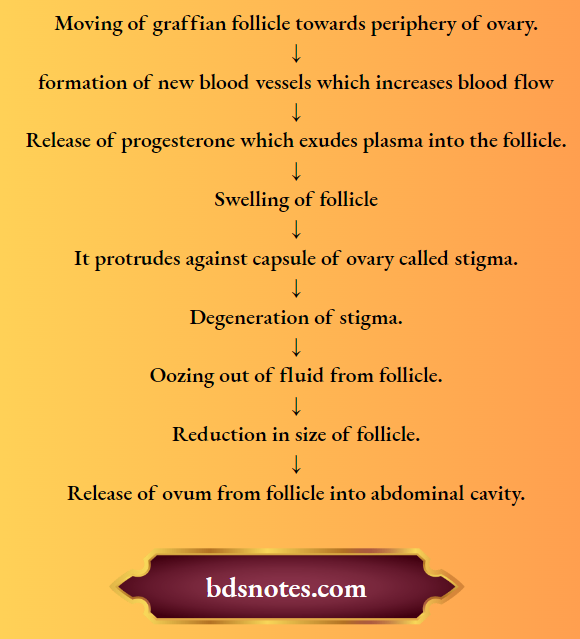
Ovulation Significance:
- Pregnancy can be prevented by determining the ovulation time.
Ovulation Hormonal regulation:
- Prior to ovulation, large amount of LH is secreted.
- This LH is important for ovulation.
Question 2. Functions of placenta.
Answer:
1. Nutritive function.
- The various nutritive substances, electrolytes and hormones required for fetal development diffuse from the mother’s blood into fetal blood through placenta.
2. Excretory function.
- All the metabolic waste products from fetal blood passes to mother’s blood through placenta.
3. Respiratory function.
- Placenta acts as respiratory organ as the fetal lungs are non-functioning.
- Oxygen from mother’s blood is received by fetal blood and carbon dioxide from fetal blood is diffuse into maternal blood through placenta.
4. Endocrine function.
- Placenta secretes five hormones.
- Human chorionic gonadotrophin (HCG).
- It is formed by placenta immediately after implantation of the fertilized ovum.
- It is responsible for preservation and secretory activity of corpus luteum.
- It stimulates the interstitial cells of leydig to secrete testosterone.
- Human chronic somatomammotrophin (HCS).
- It is lactogenic.
- It has a small amount of growth stimulating activity.
- Causes enlargement of mammary glands.
- Reduces peripheral utilization of glucose.
- Estrogen.
- Enlarges uterus for accommodating fetus.
- Enlarges breast and develops ductal system.
- Facilitates passage of fetus through the birth canal at the time of labor.
- Progesterone.
- Inhibits the contraction of uterine muscle in the pregnant uterus.
- Causes enlargement of breast and develops its ductal sysem.
- Relaxin – helps in labor.
- Human chorionic gonadotrophin (HCG).
Leave a Reply