Protein Digestion And Absorption: From Stomach To Small Intestine
How are proteins digested? Indicate the specific site at which Proteolytic enzymes act. Add a note on the amino acid pool.
Answer:
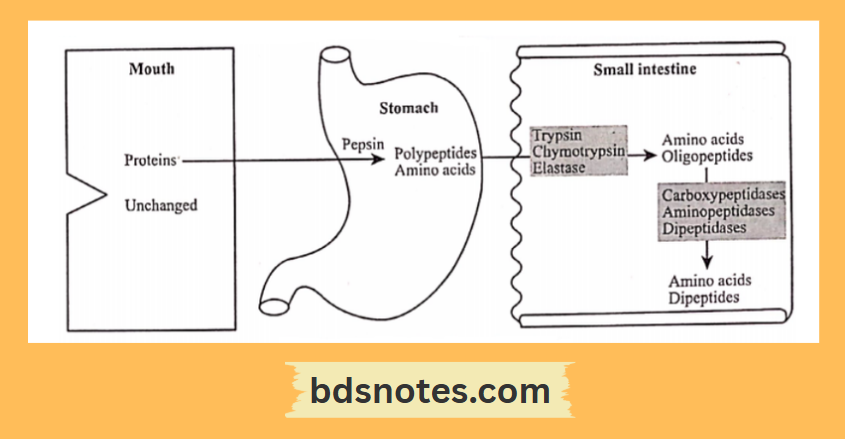
Digestion of Proteins:
- Proteins are digested in the stomach, pancreas, and small intestine.
- It doesn’t occur in the mouth due to the absence of proteases in saliva.
1. Digestion by gastric secretion in the stomach.
- Gastric juice contains hydrochloric acid and pepsinogen.
- Renin also helps in digestion, which is found in infants.
- Hydrochloric acid.
- It is secreted by the parietal cells of the gastric gland.
- It has two important functions.
- Denaturation of proteins.
- Killing of micro-organisms.
- Pepsin.
- Produced by serous cells of the stomach as pepsinogen.
- It cleaves peptide bonds formed by amino groups of phenylalanine or tyrosine.
- It results in the formation of peptides and a few amino acids which act as stimulants for the release of the hormone cholecystokinin.
- Renin.
- Involved in curdling of milk in infants.
- Converts milk protein casein to calcium paracaseinate which can be digested by pepsin.
2. Digestion by proteases present in the pancreas.
- Proteases are secreted by zymogens.
- They are initiated by cholecystokinin and secret in hormones.
- Zymogens produce active proteases namely chymotrypsin, elastase, and carboxypeptidase.
- Trypsin cleaves the peptide bond.
- Carboxypeptidase acts on peptidase bonds of COOH – terminal amino acid.
- The combined effect of all pancreatic proteases causes the formation of free amino acids and small peptides.
3. Digestion in the small intestine.
- It occurs by aminopeptidases and dipeptidases are present.
- Aminopeptidase.
- It cleaves N-terminal amino acids one by one to produce free amino acids and smaller peptides.
- Dipeptidases.
- Acts on different dipeptides to liberate amino acids.
Amino acid pool:
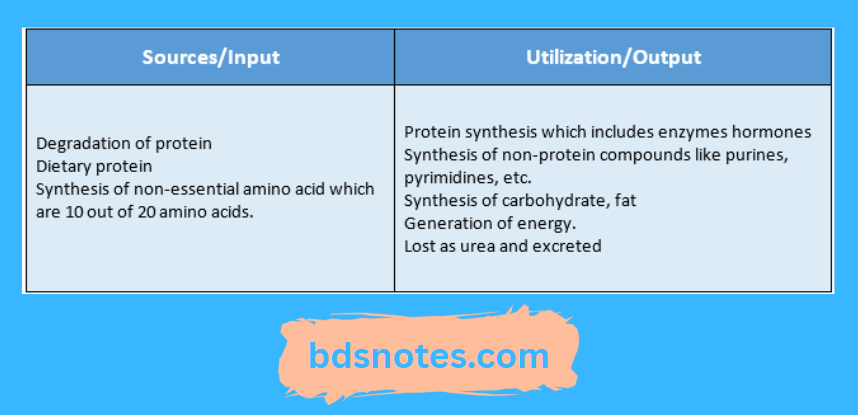
- An adult has about 100 g of free amino acids which represent tire amino acid pool of the body.
- Glutamate and glutamine constitute about 50% and essential amino acids about 10% of the body pool.
- This amino acid pool is maintained by the balance between the sources and utilization of amino acids.
Leave a Reply