Urea Synthesis And Its Role In Protein Metabolism
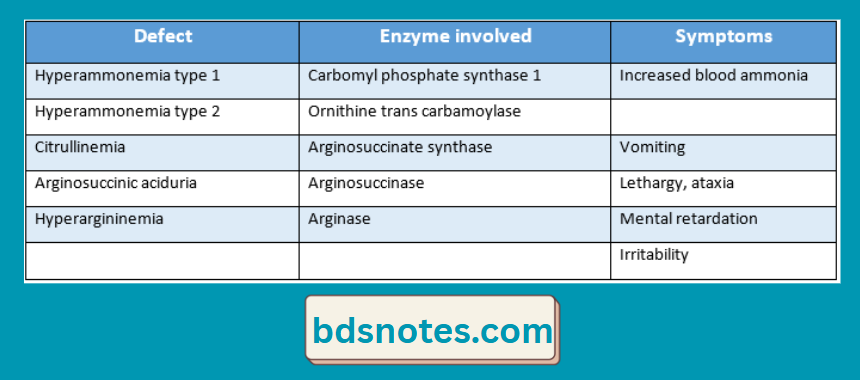
Question 1. Describe the urea cycle and its disorders/inborn errors.
Answer:
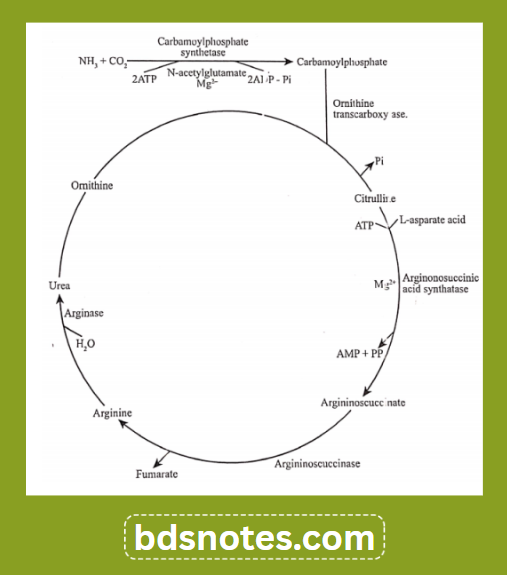
Urea cycle:
- It is the first metabolic cycle described by Hans Krebs and Kurt Her select.
- Thus, it is known as Krebs – Henseliet cycle.
- Urea is a synthesized liver.
- It has two amino groups.
- Derived from ammonia.
- Second, derived from aspartate.
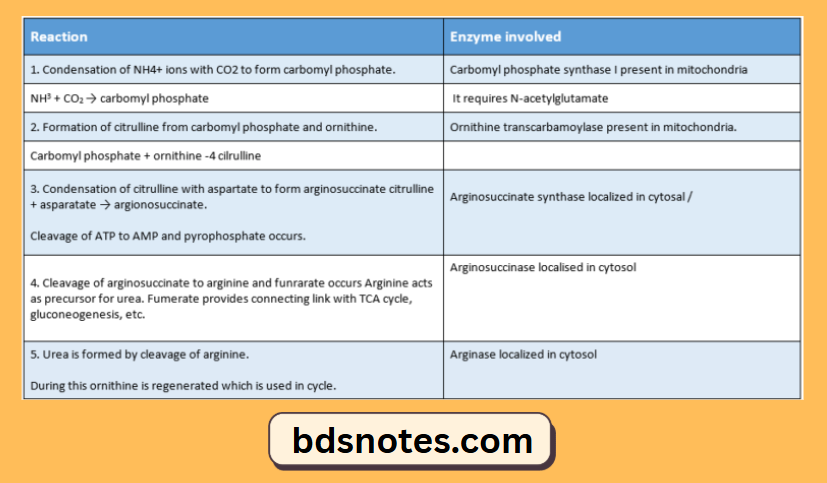
- It requires five enzymes.
Urea cycle Steps:
Urea cycle Disorders/Inborn Errors:
Question 2. What is a normal blood urea level? Describe the synthesis and fate of urea in our body.
Answer:
Normal Blood Urea Level:
- In healthy individuals, the normal blood urea level is 10 – 40 mg/ dl.
Normal Blood Urea Level Synthesis:
Normal Blood Urea Level Fate:
- Urea produced gets easily diffused and is transported by the blood to the kidneys excreted in the urine.
- A small amount of it enters the intestine.
- Here it gets degraded to CO2 and NHg by urease.
- Ammonia thus formed is excreted in feces or absorbed by tire blood.
Question 3. What is Urea? Enumerate the steps in its synthesis. Mention its significance.
Answer:
Urea:
- It is the end product of protein metabolism.
- B 80 – 90% of the nitrogen-containing substances excreted in urine contain urea.
- It has two amino groups – one from ammonia and the other from aspartate.
Steps in Urea Synthesis:
- Synthesis of carbamoyl phosphate.
- Formation of citrulline
- Synthesis of arginosuccinate
- Cleavage of arginosuccinate
- Formation of urea.
Urea Significance:
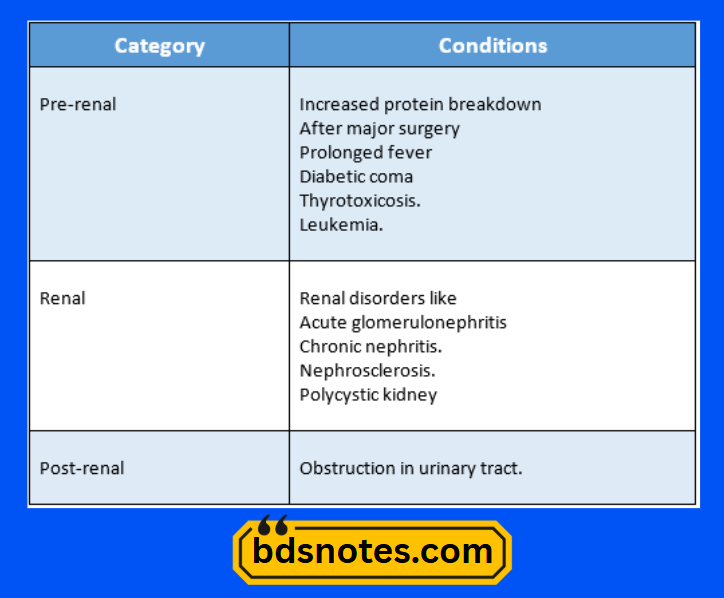
- Blood urea is used as a screening test for the evaluation of kidney function.
- Elevation in blood urea is categorized into.
- Pre-renal
- Renal
- Post-renal.
Leave a Reply