Base Pairing And Hydrogen Bonds: Key To DNA Stability
Question 1. Watson and Crick’s model of DNA structure
Answer:
Double Helical Structure of DNA:
- Proposed by James Watson and Francis Crick in 1953
Features:
- It is a right-handed double helix
- Consists of two polydeoxyribonucleotide chains twisted around each other
- The bases present are adenine
- (A), Guanine(G), Cylosine(C) and Thymine(T)
- Two strands are antiparallel, one running from 5′ to 3′ and the other vice versa Width is 20 A°
- Each turn of helix is 34 A° with 10 pairs of nucleotides
Two strands are held together by hydrogen bonds - The A-T pair has 2 hydrogen bonds, G-C pair has 3 hydrogen bonds
Content of adenine equals thymine and guanine equals cytosine – Char gaff’s rule
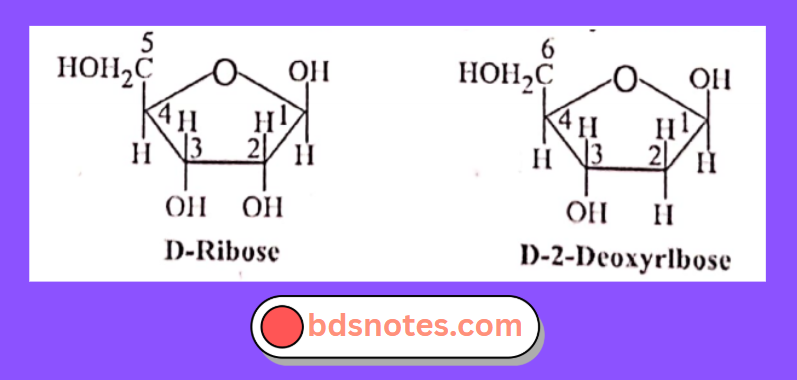
Question 2. What are nucleosides & nucleotides? Give examples of each
Answer:
Nucleotide:
- They are composed of a nitrogenous base, a pentose sugar & a phosphate
- They are monomeric units in the nucleic acid
Nucleoside:
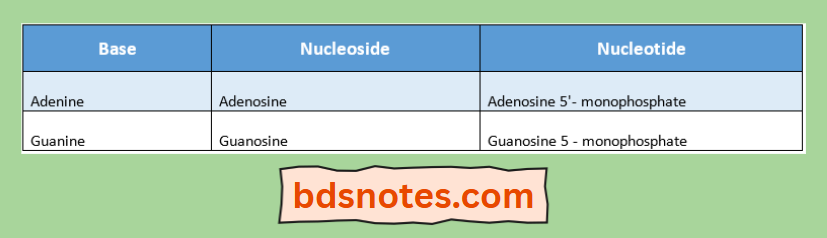
- Nucleoside is a nucleotide without esterified phosphate groups
- Examples
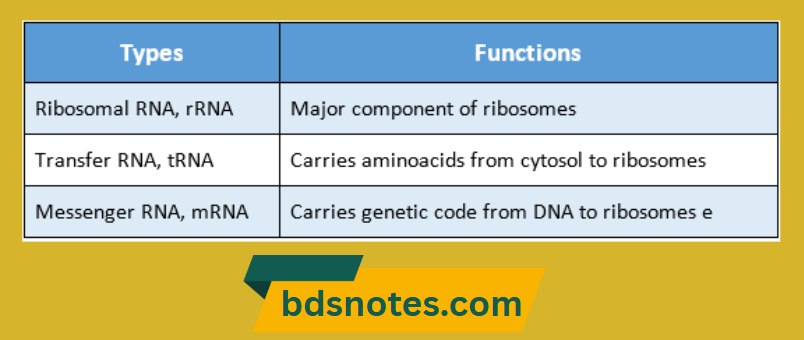
Question 3. Name different types of RNA & their functions
Answer:
Leave a Reply