Gastric Juice
Discuss the composition, function and regulation of gastric juice.
Answer:
Composition of gastric juice:
“Understanding gastric juice through FAQs: Composition, functions, and uses explained”
- Water-99.5%
- Solids-0.5%
- Organic substances.
- Enzymes.
- Pepsin helps to digest protein.
- Renin-curdles milk.
- Gastric lipase – splits fats
- Gelatinase digests gelatine.
- Urease converts urea to ammonia.
- Carbonic anhydrase – present in small amount
- Lysozyme-bacteriocidal.
- Mucus.
- Forms
- Soluble-vehicle for HCI and enzymes.
- Insoluble- protects gastric mucosa form HCI.
- Intrinsic factor.
- Helps in absorption of Vit. B12.
- Forms
- Inorganic substances.
- Hydrochloric acid.
- Cations – Na+, K+, Ca2+
- Anions -CI, HCO3‾, PO33‾, SO42‾
- Enzymes.
- Organic substances.
“Importance of studying gastric juice for medical students: Questions explained”
Functions of gastric juice:
- Digestive function:
- Pepsin.
- Digest protein and convert it into proteases, peptones and polypeptides.
- It causes curdling and digestion of milk.
- Gastric lipase.
- Hydrolyses fats into fatty acid and glycerols.
- Gelatinase-digest gelatine.
- Gastric amylase- degrade starch.
- Pepsin.
- Hemopoietic function:
- Gastric juice contains intrinsic factor of castle which is essential for absorption of Vit. B12
- Vit B12 is one of the maturation factor or erythropoiesis.
- Protective function:
- Gastric juice contains mucus which.
- Protects stomach wall from irritation.
- Prevents digestive action of pepsin on the stomach wall.
- Protects gastric mucosa from hydrochloric acid.
- Gastric juice contains mucus which.
- Functions of hydrochloric acid:
- Activates pepsinogen into pepsin.
- Bacterolytic action.
- Provides acidic media for hormones.
“Common challenges in mastering gastric juice notes effectively: FAQs provided”
Regulation: of gastric juice:
- The regulation of secretion of gastric juice is broadly brought about by two mechanism.
1. Nervous mechanism:
- It includes.
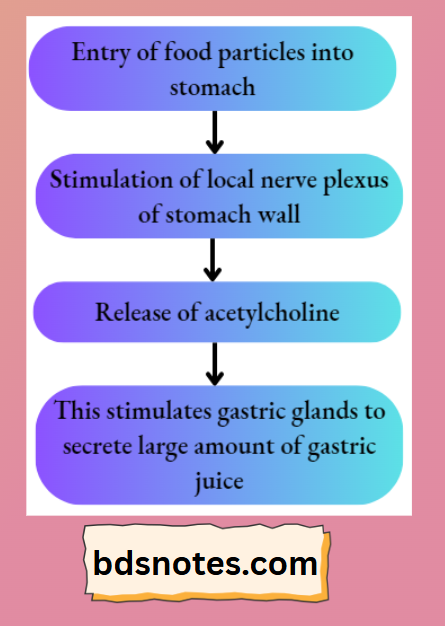
1. Local myenteric reflex:
Gastric glands and juice production
“Differential applications of traditional vs modern teaching tools: Questions answered”
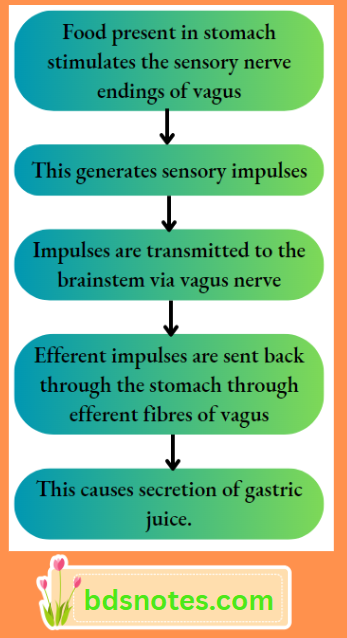
Vasovagal reflex.
“Factors influencing success with gastric juice studies: Q&A”
2. Hormonal mechanism:
- When the food enters tomach, gastrin, a GI hormone is secreted by the G cells present in pyloric glands of stomach.
- This gastrin stimulates the secretion of pepsinogen and hydrochloric acid by the gastric juice.
Leave a Reply