Ophthalmic Artery
Question 1. Ophthalmic artery
Answer:
Ophthalmic artery Origin:
- Ophthalmic artery Origin is a branch of the cerebral part of the internal carotid artery
Ophthalmic artery Course:
- Ophthalmic Artery Course enters the orbit through the optic canal
- Pierces the dura mater
- Runs along the medial wall of orbit
- Terminates near the medial angle of the eye by dividing into the supratrochlear and dorsal nasal branches
“Understanding the ophthalmic artery through FAQs: Composition, functions, and uses explained”
Ophthalmic artery Branches:
1. Central artery of retina
- First and most important branch of ophthalmic artery
2. Branches arising from the lacrimal artery
- Branches given to lacrimal gland
- Two zygomatic branches
- Lateral palpebral branches supplying the eyelids
- A recurrent meningeal branch
- Muscular branches supplying muscles of orbit
“Importance of studying the ophthalmic artery for medical students: Questions explained”
3. Branches arising from the main trunk
- Posterior ciliary arteries
- Supraorbital and supratrochlear
- Anterior and posterior ethmoidal
- Medial palpebral
- Dorsal nasal
Ophthalmic artery Applied aspect:
- Central artery of retina is only arterial supply to retina
- If it gets blocked then it leads to sudden blindness
“Common challenges in mastering ophthalmic artery notes effectively: FAQs provided”
Question 2. Extraocular muscles and their actions.
Answer:

“Factors influencing success with ophthalmic artery studies: Q&A”
Question 3. Nasociliary nerve. (or) Name branches of nasociliary nerve
Answer:
- Nasociliary is one of the terminal branches of the ophthalmic division of the trigeminal nerve
Branches of ophthalmic artery

“Steps to explain functions of the ophthalmic artery: Blood supply vs collateral circulation: Q&A guide”
Question 4. Short ciliary nerve
Answer:
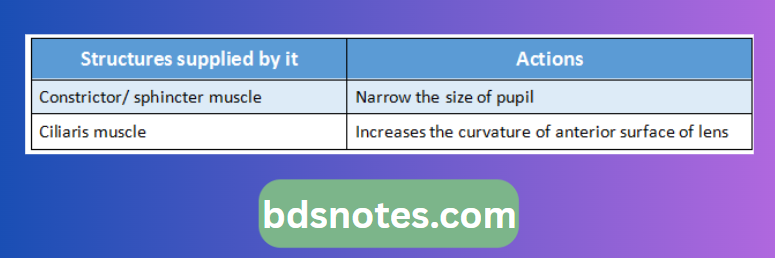
- The Postganglionic parasympathetic fibres from ciliary ganglion are distributed to the eyeball through the short ciliary nerves
Leave a Reply