• Skip to main content
  • Skip to secondary menu
  • Skip to primary sidebar
  • About Us
  • Terms of Use
  • Privacy Policy
  • Disclaimer
  • Contact Us
  • Sitemap

BDS Notes

BDS notes, Question and Answers

  • Public Health Dentistry
  • Periodontics
  • Pharmacology
  • Pathology
  • Orthodontics
    • Anchorage In Orthodontics
    • Mandibular Growth, Functional Matrix
    • Retention and Relapse
  • General Surgery
    • Cysts: Types, Causes, Symptoms
    • Maxillofacial Fractures, Disorders, and Treatments
    • Lymphatic Disorders
    • Neurological and Facial Disorders
  • Temporal And Infratemporal Regions
    • Spinal and Neuroanatomy
  • Dental Materials
    • Dental Amalgam
Home » Neutrophils

Neutrophils

July 26, 2025 by Kristensmith Taylor Leave a Comment

Neutrophils

“What are neutrophils? A detailed question and answers guide”

Question 1. Neutrophils.
Answer:

It constitute 50-70% of the total leucocyte count.

  • Size: 10-14 μ in diameter.
  • Structure:
    • Nucleus is multilobed.
    • Cytoplasm is granular, slight bluish in colour
    • Granules are fine,
    • pin-point.

“Understanding neutrophils through FAQs: Composition, functions, and uses explained”
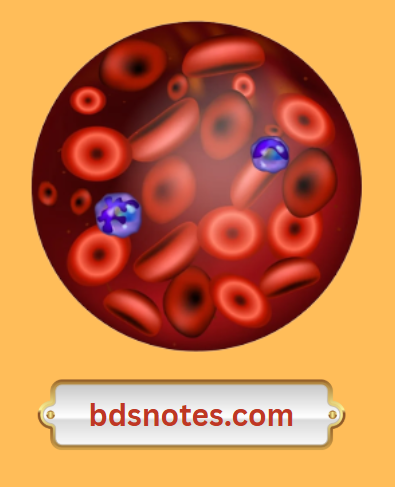
Neutrophil In Bloodstream

“Importance of studying neutrophils for medical students: Questions explained”

Functions:

  • Phagocytosis.
  • Contains fever producing substances, endogenous pyrogen.
  • Variations: causes.

Function of neutrophils
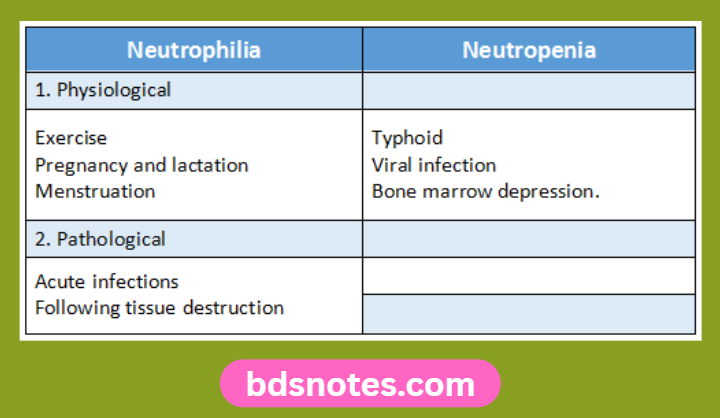
Neutrophilia Vs Neutropenia

“Common challenges in mastering neutrophil notes effectively: FAQs provided”

Question 2. Lymphocytes.
Answer:

  • It constitutes 20-30% of the total leucocyte count.

Structure:

  • Nucleus – oval, large and kidney shaped.
  • Nuclear chromatin is coarse and shapeless.
  • Cytoplasm is scanty, pale blue and agranular.

Types:

1. Depending on the size.

  • Large lymphocytes – 10-12 μ in diameter.
  • Small lymphocyte – 7-10 m in diameter.

2. Depending on function.

  • T lymphocytes – provide cellular immunity.
  • B lymphocytes – provide humoral immunity.

Life-span:

Functions:

  • They are responsible for defence mechanism by providing immunity to the body.

“Factors influencing success with neutrophil studies: Q&A”

Question 3. Autoimmune diseases.
Answer:

Definition:

  • It is the diseases produced when body’s normal tolerance decreases and the immune system fails to recognize the body’s own tissues as “self” and attacks them.

Types:

1. Organ specific disease – affects only one organ.

2. Organ nonspecific disease – affects many organs.

Cause:

  • Deficiency of suppressor – T-cell.

“Steps to explain functions of neutrophils: Phagocytosis vs degranulation: Q&A guide”

Autoimmune Diseases Table

Filed Under: Anatomy

Reader Interactions

Leave a Reply Cancel reply

Your email address will not be published. Required fields are marked *

Primary Sidebar

Recent Posts

  • Branchial Cleft Cyst: Background, Pathophysiology, Etiology
  • Maxillary Nerve: Origin, Course, And Branches
  • The Father Of Anatomy And A Great Anatomist Herophilus
  • Bone Structure – Anatomy
  • The External Carotid Artery: Anatomy, Branches, And Functions
  • Occipitofrontalis Muscle
  • Superficial Temporal Artery
  • Platysma Muscle
  • Cartilage
  • Cauda Equina And Conus Medullaris Syndromes
  • Subcutaneous Injections And Device Management
  • Types Of Circulation: Pulmonary, Systemic, And Portal
  • Structure Of Skeletal Muscle
  • Elastic Cartilage
  • Cellular Organelles And Structure
  • The Golgi Apparatus – The Cell
  • The Cytoplasmic Inclusions Of Certain Plant Cells
  • Dental Abscess
  • Laser Surgery
  • Our Facial Muscles And Their Functions

Copyright © 2026 · Magazine Pro on Genesis Framework · WordPress · Log in