Glycerol Molecule
Question 1. Glycerol is not a carbohydrate – justify the statement.
Answer:
Glycerol is a three-carbon alcohol
- It has the following structure.
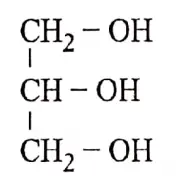
“Understanding the glycerol molecule through FAQs: Structure, functions, and uses explained”
- Each carbon is bonded to four groups and each oxygen to two groups.
- It contains multiple hydroxyl groups.
- These form attachment sites for fatty acid chains and result in triglycerides.
- However, it lacks either aldehyde or ketone groups as present in carbohydrates.
- Thus, it is not a carbohydrate, but however, the body can use it to make glucose.
“Importance of studying the glycerol molecule for medical students: Questions explained”
Question 2. Significance of citric acid cycle.
Answer:
- It is the most important metabolic pathway for the energy supply to the body.
- About 65 – 70% of the ATP is synthesized in the Krebs cycle.
- It is the final common oxidative pathway for carbohydrates, fats, and amino acids.
- It provides many intermediates required for the synthesis of amino acids, glucose, heme, etc.
- It is the most important central pathway connecting almost all the individual metabolic pathways.
- It is both catabolic and anabolic in nature.
“Common challenges in mastering glycerol molecule notes effectively: FAQs provided”
- It synthesizes the following.
- Separate from oxalacetate and glutamate from a-ketoglutarate are used for the synthesis of other nonessential amino acids, purine, and pyrimidines.
- Synthesis of porphyrins and heme from succinyl CoA.
- Biosynthesis of fatty acids, steroids, etc from acetyl CoA.
Leave a Reply