• Skip to main content
  • Skip to secondary menu
  • Skip to primary sidebar
  • About Us
  • Terms of Use
  • Privacy Policy
  • Disclaimer
  • Contact Us
  • Sitemap

BDS Notes

BDS notes, Question and Answers

  • Public Health Dentistry
  • Periodontics
  • Pharmacology
  • Pathology
  • Orthodontics
    • Anchorage In Orthodontics
    • Mandibular Growth, Functional Matrix
    • Retention and Relapse
  • General Surgery
    • Cysts: Types, Causes, Symptoms
    • Maxillofacial Fractures, Disorders, and Treatments
    • Lymphatic Disorders
    • Neurological and Facial Disorders
  • Temporal And Infratemporal Regions
    • Spinal and Neuroanatomy
  • Dental Materials
    • Dental Amalgam
Home » Citric Acid Cycle Regulation

Citric Acid Cycle Regulation

July 28, 2025 by Kristensmith Taylor Leave a Comment

Citric Acid Cycle Regulation

Describe the following aspects of the citric acid cycle.

  1. Reactions
  2. Energetics
  3. Regulation
  4. Functions

Answer:

Citric acid cycle:

It is a cyclic process that involves the oxidation of acetyl CoA to carbon dioxide and water.

Reactions:

“Understanding citric acid cycle regulation through FAQs: Mechanisms, functions, and uses explained”
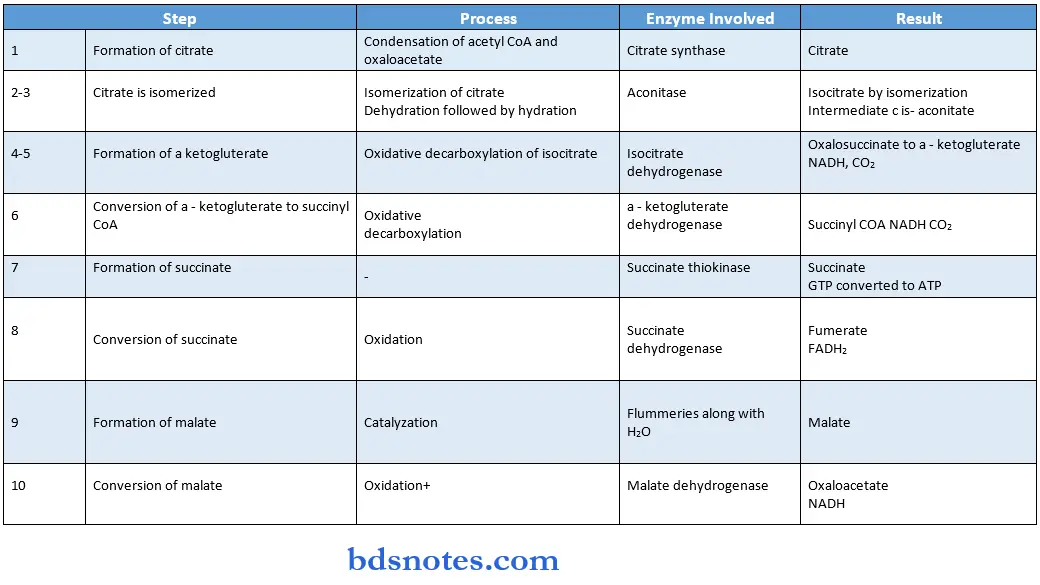
Carbohydrate citric acid cycle

“Importance of studying citric acid cycle regulation for biochemistry students: Questions explained”

Energetics:

  1. Each NADH produces 3 ATP through the electron transport chain. 3 NADH is produced in the citric acid cycle
  2. Each FADH2 produces 2 ATP through the electron transport chain. 1 FADH2 is produced in the citric acid cycle.
  3. Substrate-level phosphorylation produces one ATP

How is the citric acid cycle regulated

Thus, the total ATP produced is:
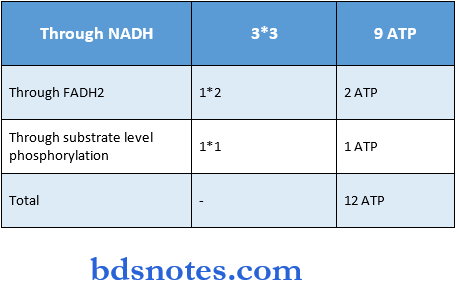
Carbohydrate through NADH

“Common challenges in mastering citric acid cycle notes effectively: FAQs provided”

Regulation:

  • The citric acid cycle is regulated by three simple mechanisms
  • Substrate availability
  • Product inhibition
  • Competitive feedback inhibition
    • All regulatory enzymes of the citric acid cycle are inhibited by NADH
    • ATP is an allosteric inhibitor of pyruvate dehydrogenase and isocitrate dehydrogenase

“Factors influencing success with citric acid cycle studies: Q&A”

Functions:

  • It is the most important pathway for the energy supply to the body
  • It is the final oxidative pathway for carbohydrates, fats, and amino acids
  • It provides many intermediates required for the synthesis of amino acids, glucose, heme, etc.
  • It synthesizes
    • Aspartate from oxaloacetate
    • Glutamate from a-ketoglutarate
    • Porphyrins and heme from succinyl CoA
    • Fatty acids, steroids from acetyl CoA

Filed Under: Anatomy

Reader Interactions

Leave a Reply Cancel reply

Your email address will not be published. Required fields are marked *

Primary Sidebar

Recent Posts

  • Branchial Cleft Cyst: Background, Pathophysiology, Etiology
  • Maxillary Nerve: Origin, Course, And Branches
  • The Father Of Anatomy And A Great Anatomist Herophilus
  • Bone Structure – Anatomy
  • The External Carotid Artery: Anatomy, Branches, And Functions
  • Occipitofrontalis Muscle
  • Superficial Temporal Artery
  • Platysma Muscle
  • Cartilage
  • Cauda Equina And Conus Medullaris Syndromes
  • Subcutaneous Injections And Device Management
  • Types Of Circulation: Pulmonary, Systemic, And Portal
  • Hierarchical Organization Of Skeletal Muscle Tissue
  • Elastic Cartilage Histology Short Note For Medical Exams
  • Cellular Organelles And Structure
  • The Golgi Apparatus – The Cell
  • The Cytoplasmic Inclusions Of Certain Plant Cells
  • Dental Abscess
  • Laser Surgery
  • Our Facial Muscles And Their Functions

Copyright © 2026 · Magazine Pro on Genesis Framework · WordPress · Log in