Modified Oral Screen
Write short note on oral screen.
Or
Write briefly on oral screen.
Answer. Oral screen is a simple functional appliance that takes the form of a curved shield of acrylic placed in labial vestibule.
“Understanding the role of modified oral screens in orthodontic treatment: Q&A explained”
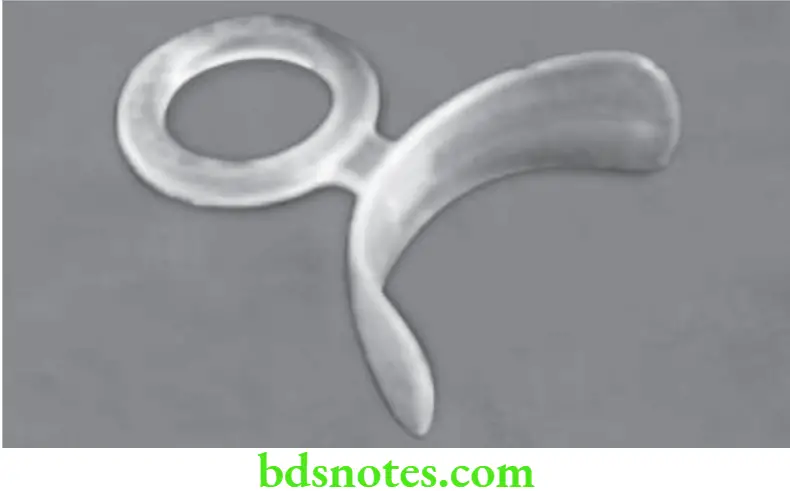
“Importance of studying modified oral screens for better dental outcomes: Questions explained”
Mechanism of Action
- It prevents the pressure applied by cheeks to act over dentition. This leads the tongue to exert it forces. Passive expansion of arches occurs.
- Pressure created by lips is directed over incisors. This leads to lingual movement of labially proclined teeth.
- Forward movement of lower jaw occurs.
- Activation of hypotonic lips.
- Upper incisors get retroclined.
- Molars undergo differential eruption.
“Common challenges in using modified oral screens effectively: FAQs provided”
Fabrication/Construction of Appliance
- For fabrication of oral screen clear acrylic is used.
- Working models should be placed in normal occlusion.
- Wax up procedure for appliance should be carried out.
- Incisal third region of anterior teeth should not be covered with the wax.
- Wax up is done over buccal surface of teeth and alveolar process is covered with two layers of wax till distal aspect of permanent first molar in its vestibular depth.
“Early warning signs of issues addressed by modified oral screens: Common questions”
- In primary dentition the extension of wax is till distal part of second deciduous molar.
- Curvature of appliance should lie between maxillary and mandibular incisors and in mandibular labial sulcus for the acceptance of lower lip.
- As compared to buccal vestibular sulcus depth edges should be less in thickness.
- Allowances should be created for buccal and labial frenum.
- Processing of appliance is done by either heat cure or self cure acrylic.
- Trimming and polishing of the appliance is done.
“Steps to explain different types of modified oral screens: Custom vs prefabricated: Q&A guide”
Oral Screen Management
- Patient should ask to wear the appliance in night and also at day time if it is possible for him/her.
- Lip seal is maintained for 30 to 45 minutes in a day.
Oral Screen Indications
- As active and passive appliance.
- In correction of tongue thrusting, thumb sucking and lip biting.
“Role of modified oral screens in myofunctional therapy: Questions answered”
- For correcting mouth breathing habit.
- For correcting mild proclined incisors.
- For correction of hypotonic lip.
- For correction of mild disto-occlusion.
Leave a Reply