Understanding The Skeletal Parameters Of Down’s Analysis In Orthodontics
Write short note on skeletal parameters of Down’s analysis.
Answer. Following are the skeletal parameters of Down’s analysis:
“Understanding the role of skeletal parameters in Down’s analysis: Q&A explained”
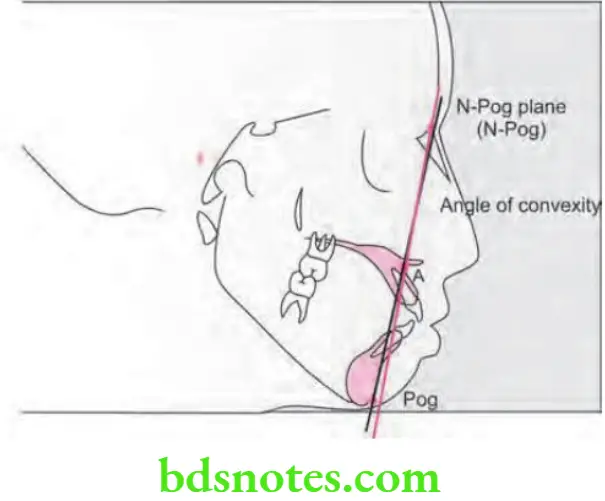
Facial Angle
- It is the inferior inside angle which is formed by the intersection of the facial line, i.e. nasion-pogonion to the Frankfort Horizontal plane.
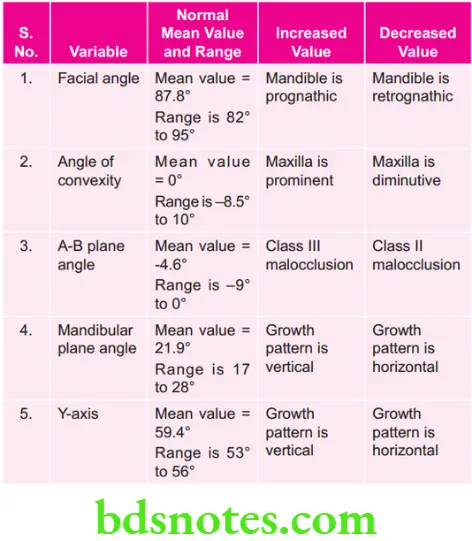
- Mean reading for this angle is 87.8°.
- It measures the degree of retrusion or protrusion of the lower jaw.
- It denotes the degree of recession or protrusion of the mandible about the upper face.
- Prominent chin increases this angle while smaller than average angular reading suggests retrusive or retropositioned chin.
“Importance of studying Down’s analysis for better orthodontic outcomes: Questions explained”
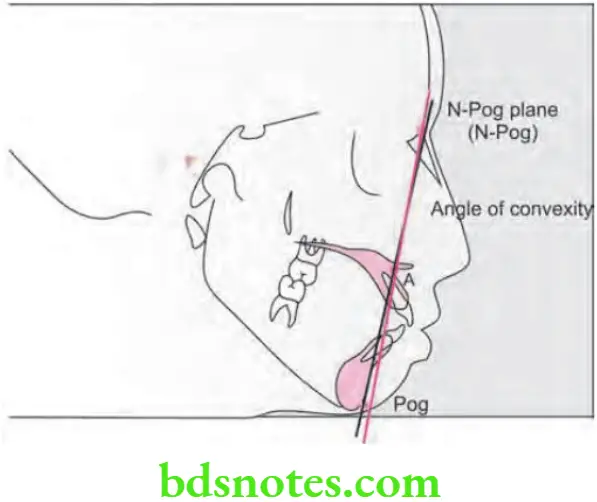
Angle of Convexity
- It is formed by intersection of line N-point A to point A- Pogonion.
- It measures the placement of the maxillary basal arch at the anterior limit, i.e., Point A, relative to the total facial profile—Nasion-pogonion.
- This angle should be read in plus or minus degrees starting from zero.
- Mean value is 0°.
“Common challenges in applying Down’s skeletal parameters effectively: FAQs provided”
- Positive angle suggests prominence of maxillary denture base relative to mandible while the negative angle is associated with prognathic profie or Class III profile.
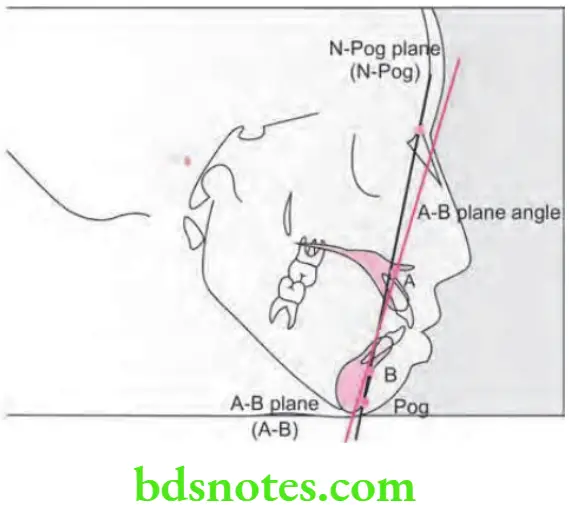
AB Plane Angle
- Points A and B are joined by a line which when extended forms an angle with the line Nasion-Pogonion, this is called the A-B plane angle.
“Steps to explain different skeletal parameters in Down’s analysis: SNA vs SNB: Q&A guide”
- The A-B plane is a measure of the relation of the anterior limit of the apical bases to each jaw relative to the facial line. Generally point B is positioned behind point A thus, this angle is usually negative in value, except in Class 3 malocclusions or Class I occlusions with prominence of the mandible.
- A large negative value suggests a Class II facial pattern, which can be due to the retropositioned chin or mandible or underdeveloped chin point or a prominent maxilla, i.e,. point B located behind point A.
- The mean value of the AB-plane angle is 4.6°.
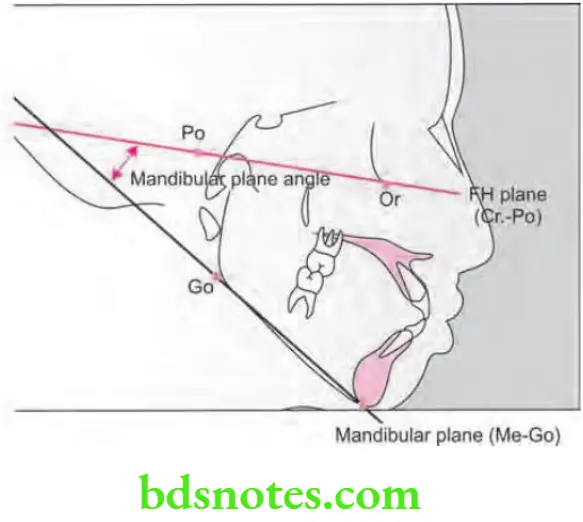
Mandibular Plane Angle
- The Down’s mandibular plane is “tangent to the gonial angle and the lowest point of the symphysis”.
- The mandibular plane angle is established by relating the mandibular plane to the Frankfort horizontal (FH) plane.
“Role of ANB angle in diagnosing skeletal discrepancies using Down’s analysis: Questions answered”
“Early warning signs of issues addressed by Down’s skeletal parameters: Common questions”
- High mandibular plane angles occur in both retrusive and protrusive faces and are suggestive of unfavorable hyperdivergent facial patterns or ’long face cases’.
- Mean value of mandibular plane angle is 21.9°.
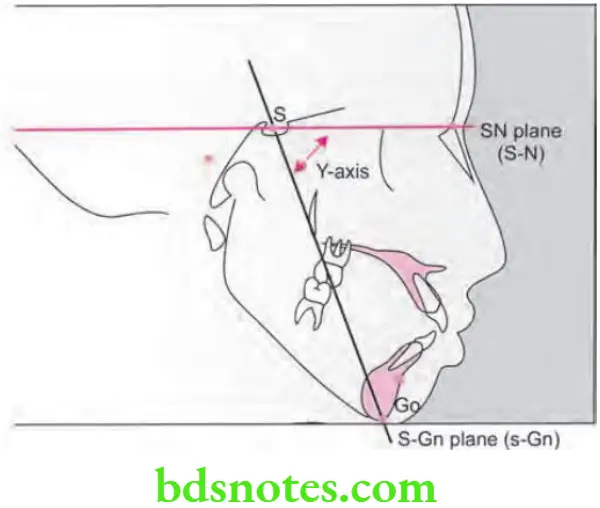
Y(Growth) Axis
“Asymptomatic vs symptomatic effects of ignoring skeletal parameters in Down’s analysis: Q&A”
- Growth axis is measured as an acute angle formed by the intersection of a line from sella turcica to Gnathion with the Frankfort horizontal plane.
- This angle is larger in Class II facial pattrns than in those with Class 3 tendencies.
- It indicates the degree of downward, rear ward or forward position of the chin in relation to the upper face.
- A decrease of the Y-axis in serial radiographs may be interpreted as a greater horizontal than vertical growth of the face or a deepening of the bite in orthodontic cases. An increase in the Y-axis is suggestive of vertical growth exceeding horizontal growth of the mandible or an opening of the bite during orthodontic treatment.
- The Y-axis reading also increases with the extrusion of the molars.
- Mean value of Y-axis is 59.4°.
Summary of Skeletal Parameters of Down’s Analysis
Leave a Reply