Basics Of Orthodontic Anchorage
- It refers to the resistance offered by the two malposed units.
- When dissipation of equal and opposite forces tends to move each unit towards each other in normal occlusion.
“Understanding the basics of orthodontic anchorage in treatment planning”

“Importance of studying orthodontic anchorage for better treatment outcomes”
Orthodontic Anchorage Basics
- Two teeth or two groups of teeth of equal anchorage value are made to move in opposite directions.
- Examples of reciprocal anchorage are:
- Closure of midline diastema—By moving two central incisors towards each other.
- Crossbite elastics—For correction of single tooth posterior crossbite.
“Common challenges in managing orthodontic anchorage during treatment”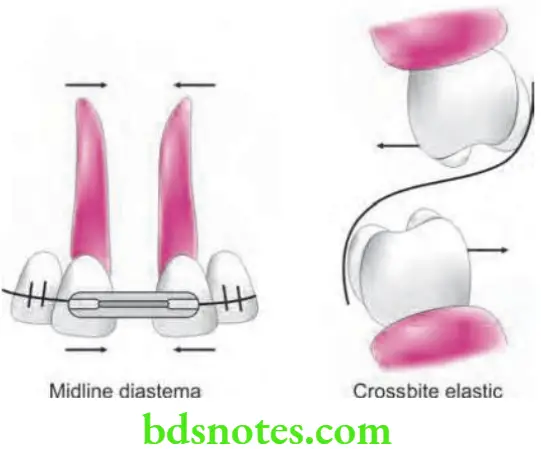
“Steps to explain different types of orthodontic anchorage”
Anchorage In Orthodontics
Anchorage In Orthodontics Definition
It is also known as multiple anchoragess.
- In this more than one type of resistance unit is utilized.
- Reinforced anchorage is the augmentation of anchorage by various methods,i.e., extraoral appliances, upper anterior inclined plane or trans palatall arch.
- Here, the extra forces are generated from extraoral sites of the cranium, back of the neck, and face
- The resistance units become more and moreeffectiveee when numerous units are added since the reactionary force should be distributed over a wide range of area.
- As the forces are distributed, their effect become light which leads to less trauma and pain at time of orthodontic treatment.
- Reinforced anchorage is done by various methods, such as:
Types Of Orthodontic Anchorage
Read And Learn More: Anchorage In Orthodontics Notes
“Asymptomatic vs symptomatic effects of improper anchorage use”
Extraoral Forces to Augment Anchorage
Forces which are generated from the extraoral areas i.e. cranium, back of the neck and face is used to reinforce the anchorage.
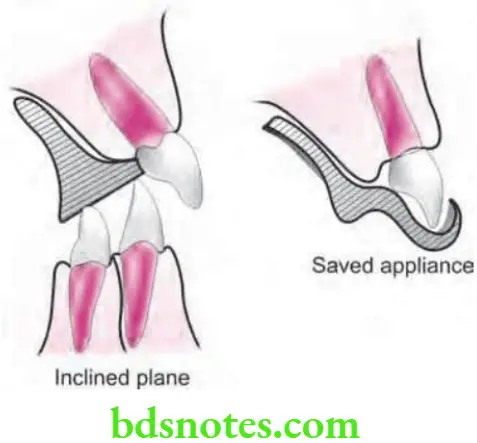
Upper Anterior Inclined Plane
Orthodontic Anchorage Principles
A removable appliance that incorporates an upper anterior inclined plane leads to the forward glide of the mandible at the time of closure of the jaw. This causes stretching of the retractor of the muscle of the mandible, which contracts and forces the mandible against the upper inclined plane. So, a distal force is applied over maxillary teeth, reinforcing the maxillary anchorage. Modification of the anterior inclined plane is Sved apappliance, which has an additional upper incisal capping.
Anchorage Control In Braces
“Role of intraoral vs extraoral anchorage in orthodontic treatment”
Use of Transpalatal Arch and Lingual Arches
Transpalatal is a wire that spans the alate in the transverse direction, connecting thefirstt molars of either side. These are indicated in field mechanotherapy to augment the anchorage. Similarly, an arch connecting the contralateral mandibular molars runs along the lingual aspect of the mandibular arch and prevents the mesial movement of mandibular molars. This is known as the lingual arch. Both the lingual and trans palatal arch get soldered to the lingual aspect of molar bands, which are cemented to these teeth.
“Early warning signs of poor anchorage control during orthodontic care”
Leave a Reply