Aggressive Periodontitis
Write in detail about aggressive periodontitis its pathogenesis, clinical features, microbiologic findings and underlying immune mechanism.
Answer.
Aggressive Periodontitis Pathogenesis
- Bacterium A. actinomycetemcomitans is the primary organism in causing aggressive periodontitis. A. actinomycetemcomitans releases various virulence factors which leads to aggressive periodontitis.
- Bacterium produces a strong leukotoxin that kill neutrophils and macrophages which provides important defense against periodontal infections.
- Endotoxin produced by bacterium leads to activation of host cells to secrete inflammatory mediators such as prostaglandins, interleukin 1 and 3, TNF-α.
- Bacteriocin released by bacterium leads to inhibition of IgG and IgM production.
- Collagenases lead to degradation of collagen.
- Chemotactic inhibition factors leads to inhibition of neutrophil chemotaxis.
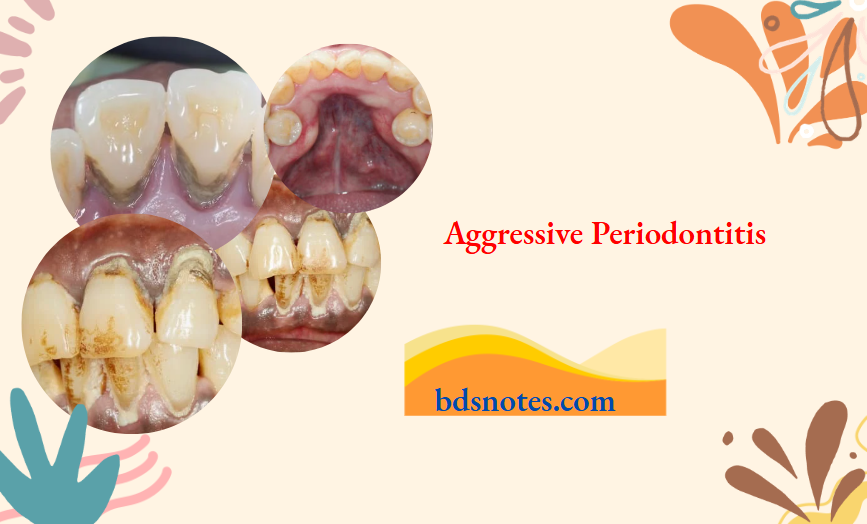
Aggressive Periodontitis Microbiologic Findings
- A. actinomycetemcomitans is the key microorganism in aggressive periodontitis. It shows virulence factors such as collagenases, leucotoxin, endotoxin, bacteriocin and chemotactic inhibition factors which leads to extensive periodontal destruction.
- Gram-positive organisms such as streptococci, actinomyces and peptostreptococci.
- Capnocytophaga species are seen.
- Eikenella corrodens and Prevotella intermedia are also seen.
Aggressive Periodontitis Immune Mechanism
- There is an intense infiltration of polymorphonuclear neutrophils which suggests the importance of polymorphonuclear neutrophils in local defense against the bacterial aggression and their major role during host mediated tissue destruction.
- B-lymphocytes and plasma cells constitute the mononuclear defense cells. Plasma cell majorly produces IgG and minor amount of IgA.
- Gingival crevicular fluid consists of active IgG which forms a line of defense against the initial bacterial invasion.
- Peripheral blood monocytes in patients suffering with aggressive periodontitis may demonstrate reduced autologous mixed lymphocyte reactions.
- High level of PGE2 and IL-lβ is observed in aggressive periodontitis patients.
- This demonstrates that T-helper cells are depressed in numbers compared to T-suppressor cells.
- Titer of antibodies is raised which is specificc to aggressive periodontitis associated microorganisms have been found in crevicular fluid than compared to peripheral blood.
- In aggressive periodontitis, there is decreased migration and function of polymorphonuclear neutrophils. These abnormalities are usually minor. These abnormalities in PMNs have been found to have familial aggregation.
Leave a Reply