Septic Shock Treatment & Management
Answer. Septic shock is a vasodilator shock wherein there is peripheral vasodilation causing hypotension which is resistant to vasopressors.
Septic Shock Etiology
Septic shock may be due to Gram-positive organisms, Gram negative organisms, fungi, viruses or protozoal origin.
Pathophysiology of Septic Shock
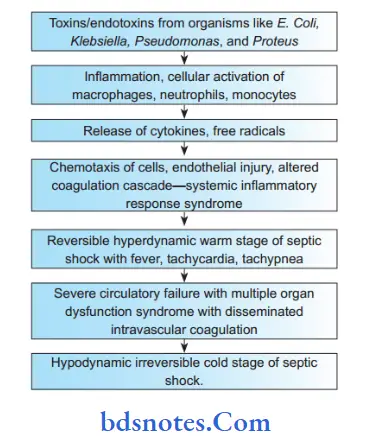
“Causes Of Septic Shock”
Septic Shock Clinical Features
Based on stages of septic shock.
Hyperdynamic or warm shock:
- It is a reversible stage.
- Patient has fever, tachycardia and tachypnea
- Pyogenic response is intact
“Symptoms Of Septic Shock”
Hypodynamic or cold septic shock:
- Pyogenic response is lost.
- Patient is in decompensated shock.
- Presence of anuria, cyanosis, jaundice, cardiac depression, pulmonary edema, hypoxia, drowsiness,coma and death.
“Risk Factors For Septic Shock”
Septic Shock Treatment/Management
- Correction of flid and electrolyte by crystalloids, blood transfusion. Perfusion is very/most important.
- Appropriate antibiotics-third generation cephalosporins and aminoglycosides.
- Treat the cause or focus—drainage of an abscess; lapa-rotomy for peritonitis; resection of gangrenous bowel;wound excision.
- Pus/urine/discharge/bile/blood culture and sensitivity for antibiotics.
“Understanding The Causes Of Septic Shock”
- Critical care, oxygen, ventilator support, dobutamine dopamine/noradrenaline to maintain blood pressure and urine output.
- Activated C protein prevents the release of inflmmatory mediators and blocks the effcts of these mediators on cellular function.
- Monitoring the patient by pulse oximetry, cardiac status,urine output, arterial blood gas analysis.
- Short-term (one or two doses) high-dose steroid therapy to control and protect cells from effects of endotoxemia.
It improves cardiac, renal, and lung functions. Single dose of methylprednisolone or dexamethasone which often may be repeated again after 4 hours is said to be effective in endotoxic shock.
Leave a Reply