Cleft Lip & Cleft Palate: Causes & Treatment
Describe development and congenital anomalies of palate.
Answer.
Congenital anomalies of palate Development
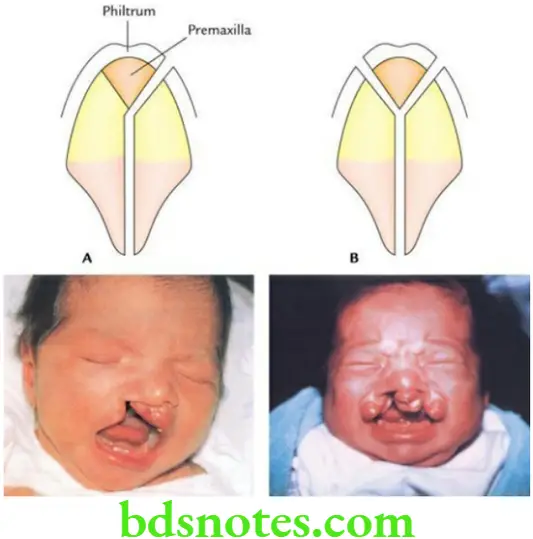
The primary palate, the small triangular anterior part opposite incisor teeth (i.e. premaxilla), develops from the frontons process (strictly speaking from the intermaxillary segment formed by the fusion of medial nasal processes of the frontonasal process).
The secondary palate, the remaining large posterior part, develops from two shelf-like outgrowths, the palatine shelves, on each side from maxillary processes congenital anomalies of palate anomalies
The congenital anomalies of the palate are common due to failure of fusion of its primitive parts, viz. premaxilla and right and left palatine shelves. These are as follows:
- Complete cleft: It may be unilateral or bilateral. It is usually associated with the cleft lip as the philtrum (the median triangular part) of the upper lip also develops from’ the frontonasal process.
- Incomplete cleft lip: It may present as a bifid uvula or cleft of the soft palate (involving only the uvula or the whole of the soft palate.
Leave a Reply