Medial And Lateral Pterygoid Muscle: Anatomy And Function
Why lateral pterygoid muscle is regarded as the key muscle of the infratemporal region? List its relations.
Answer.
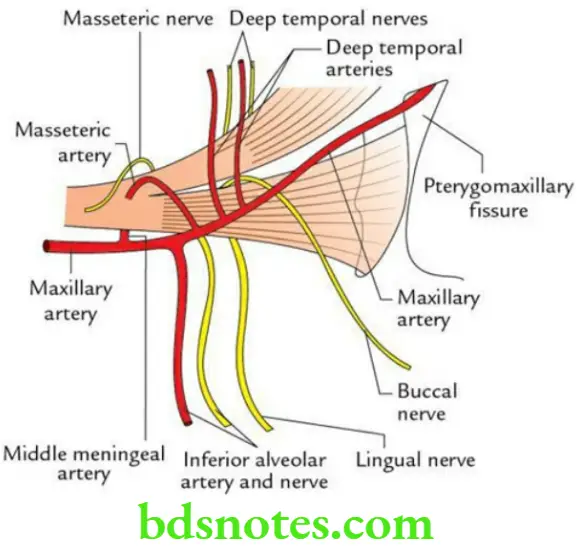
The lateral pterygoid muscle is regarded as the key muscle of the infratemporal region because its relations provide the fair idea of the layout of the structures in the infratemporal fossa.
Lateral Pterygoid Muscle Relations
“Understanding the anatomy and function of medial and lateral pterygoid muscles through FAQs: Q&A explained”
Lateral Pterygoid Muscle Superficial relations
- Masseter
- Ramus of mandible
- Tendon of temporalis
- Maxillary artery
“Importance of studying the medial and lateral pterygoid muscles for dental and medical students: Questions explained”
“Common challenges in understanding medial and lateral pterygoid muscle anatomy effectively: FAQs provided”
Lateral Pterygoid Muscle Deep relations
- Mandibular nerve
- Middle meningeal artery
- Sphenomandibular ligament
- Deep head of medial pterygoid
Lateral Pterygoid Muscle Structures emerging from the upper border
- Deep temporal nerves
- Masseteric nerve
“Factors influencing success with medial and lateral pterygoid muscle knowledge: Q&A”
Lateral Pterygoid Muscle Structures emerging from its lower border
- Lingual nerve
- Inferior alveolar nerve
- Middle meningeal artery (in fact passes upward deep to muscle)
Lateral Pterygoid Muscle Structures passing between two heads
- Maxillary artery (enters)
- Buccal branch of mandibular nerve (comes out)
Leave a Reply