Question 1. Enumerate various methods of bone growth and discuss the factors affecting bone growth.
Answer.
Methods of Bone Growth
Read And Learn More: Orthodontics Question And Answers
According to Proffit’s
“Understanding the role of genetics in bone growth: A comprehensive guide”

“Importance of studying factors affecting bone growth for better health outcomes”
According to Moyer,
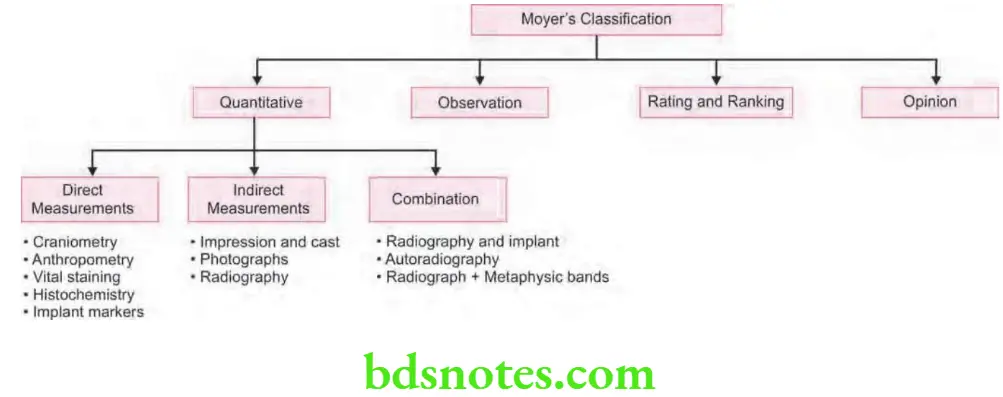
“Common challenges in addressing factors affecting bone growth effectively”
Factors Affecting Bone Growth
- Genetic factors: Genes play overall role in a growth of a person. Final outcome and growth depends on interaction between genetic potential and environmental factors.
- Nutrition: Poor nutrition at critical stages of life permanently alter the normal developmental pattern of bone.
- Proper nutrition is necessary for normal postnatal growth.
- Diet should include proteins, vitamins, minerals, etc.
- Minerals such as calcium, magnesium, phosphorous, manganese, florides, etc. are essential for proper bone and tooth growth as well as maturation.
- Vitamin A regulates activities of osteoclasts and osteoblasts, and deficiency of vitamin A may be associated with defective bone growth.
- Vitamin D is required for normal bone growth along with calcium.
- Malnutrition results in disordered growth.
- If ill effects are not so severe, growth process accelerates when adequate nutrient is provided. This is known as “catching up” growth.
“Steps to explain the biological factors affecting bone growth”
- Secular trends: In a large population changes in size and maturation is shown to occur with time. For example, l5 year old boys are 5 inches taller than the same age group some decades earlier. Such secular trend is due to improved socioeconomic status and improved diet.
- Psychological stress: Psychological stress can adversely affect growth by inhibiting hormone secretion. Psychological stress leads to retard in bone growth.
- Illness: Prolonged and debilitating illness can have an adverse effct on bone growth.
- Climate and seasonal effcts: Growth in height is faster in spring than in autumn, while weight increase occurs faster in autumn than in spring.
- Race: Race play a role in growth process. In American blacks eruption and calcifiation of teeth occur an earlier than American whites.
- Growth hormones and growth factors: Various endo-crinal hormones have some inflence on growth of bone.
“Early warning signs of issues with bone growth during development”
- Postnatal growth is affected by the circulating concentration of growth hormone, growth hormone releasing hormone and somatostatin.
- All tissues respond to growth hormone and produce a proportional body growth that slows aftr puberty when secretion of the hormone decreases.
- Lack or ab sence of growth hormone causes dwarfim, whereas its continued secretion produces gigantism.
- Abnormal secretion of growth hormone after the epiphysis plates have fused, leads to acromegaly.
- The hormones of thyroid gland, thyroxine and triiodothyronine stimulate metabolism and are important in the growth of bones and teeth.
“Role of growth plates in determining bone length and density”
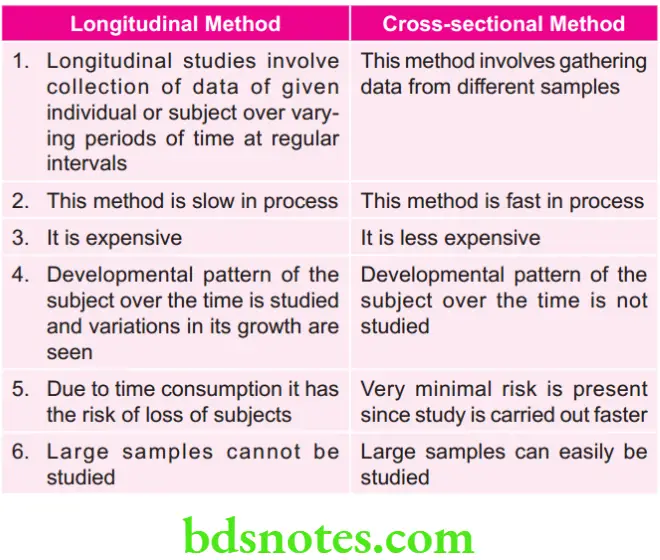
Question 2. Compare longitudinal and crosssectional method of growth studies.
Answer.
Leave a Reply